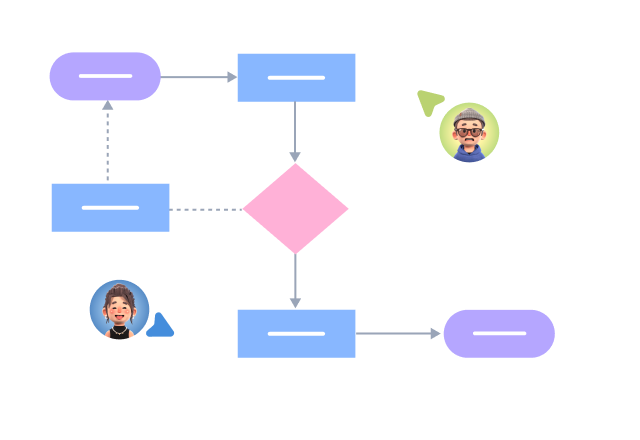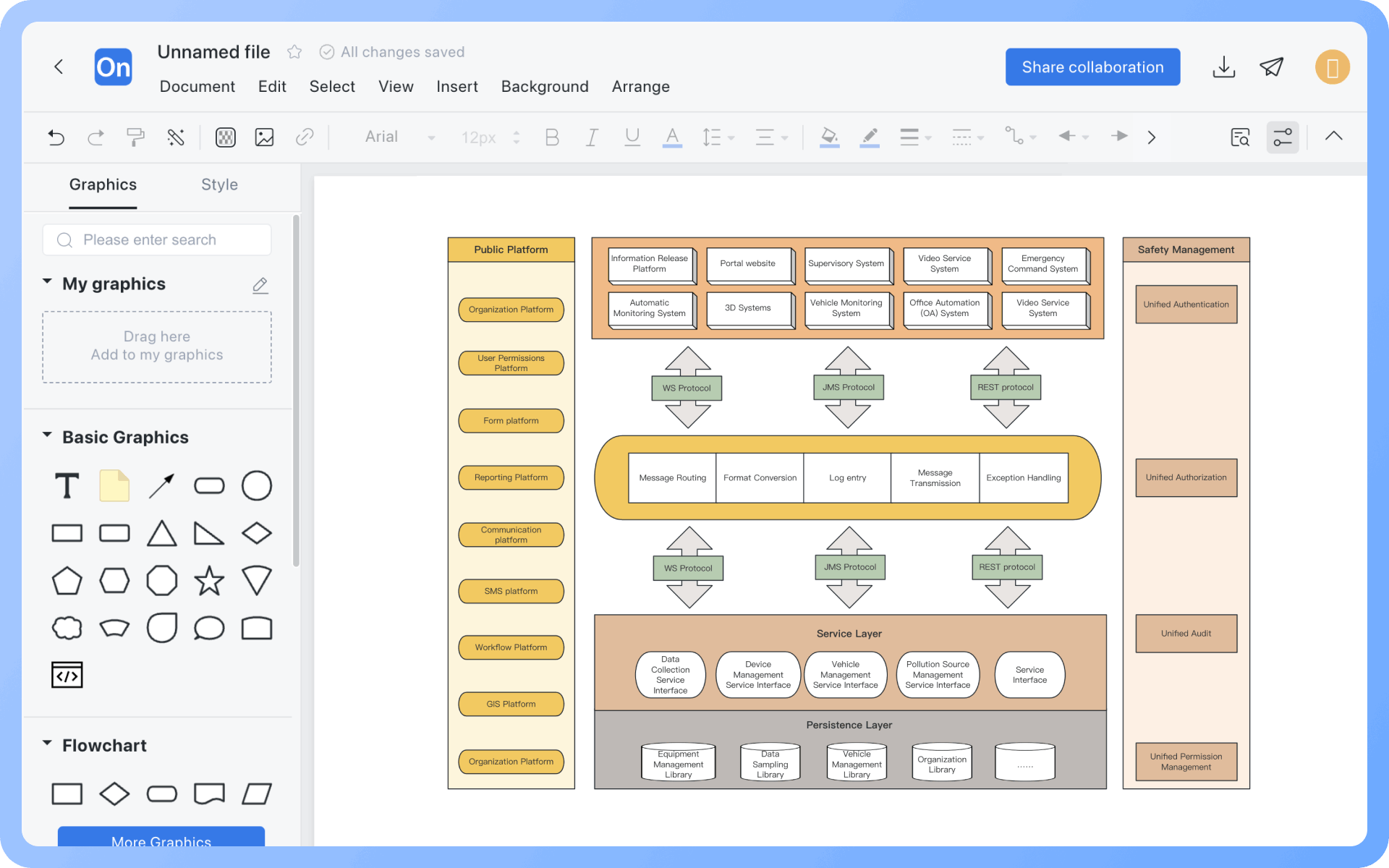


Supports real-time multi-user co-creation with shareable links for instant information transfer
Automatically generates graphics from text input and applies style enhancements
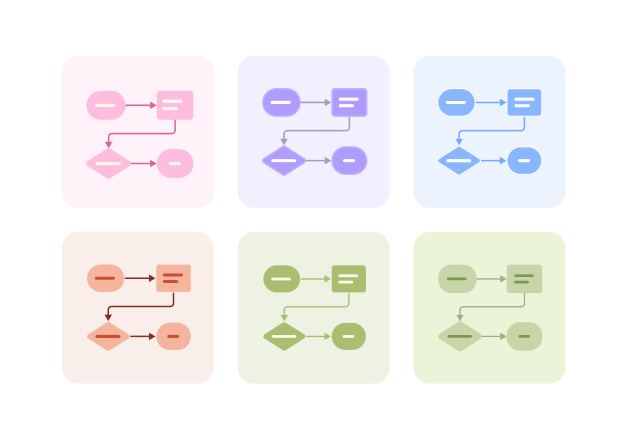
Prebuilt themes with full customization for personalized designs
Supports icons, images, labels, LaTeX formulas, code blocks, links, attachments and more
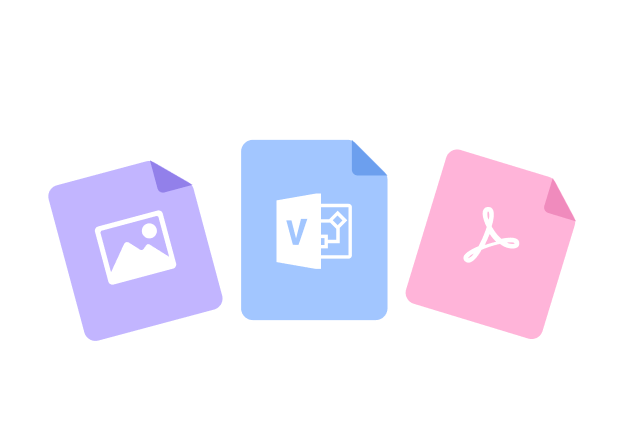
Export: PNG, VISIO, PDF, SVG | Import: VISIO, Mermaid
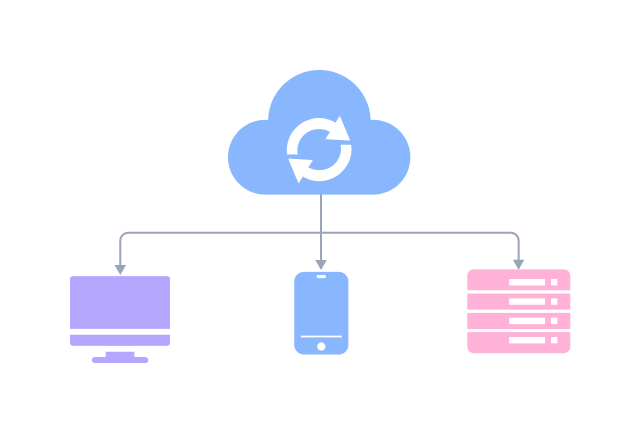
Real-time cloud storage, multi-device sync, version history, and secure data protection
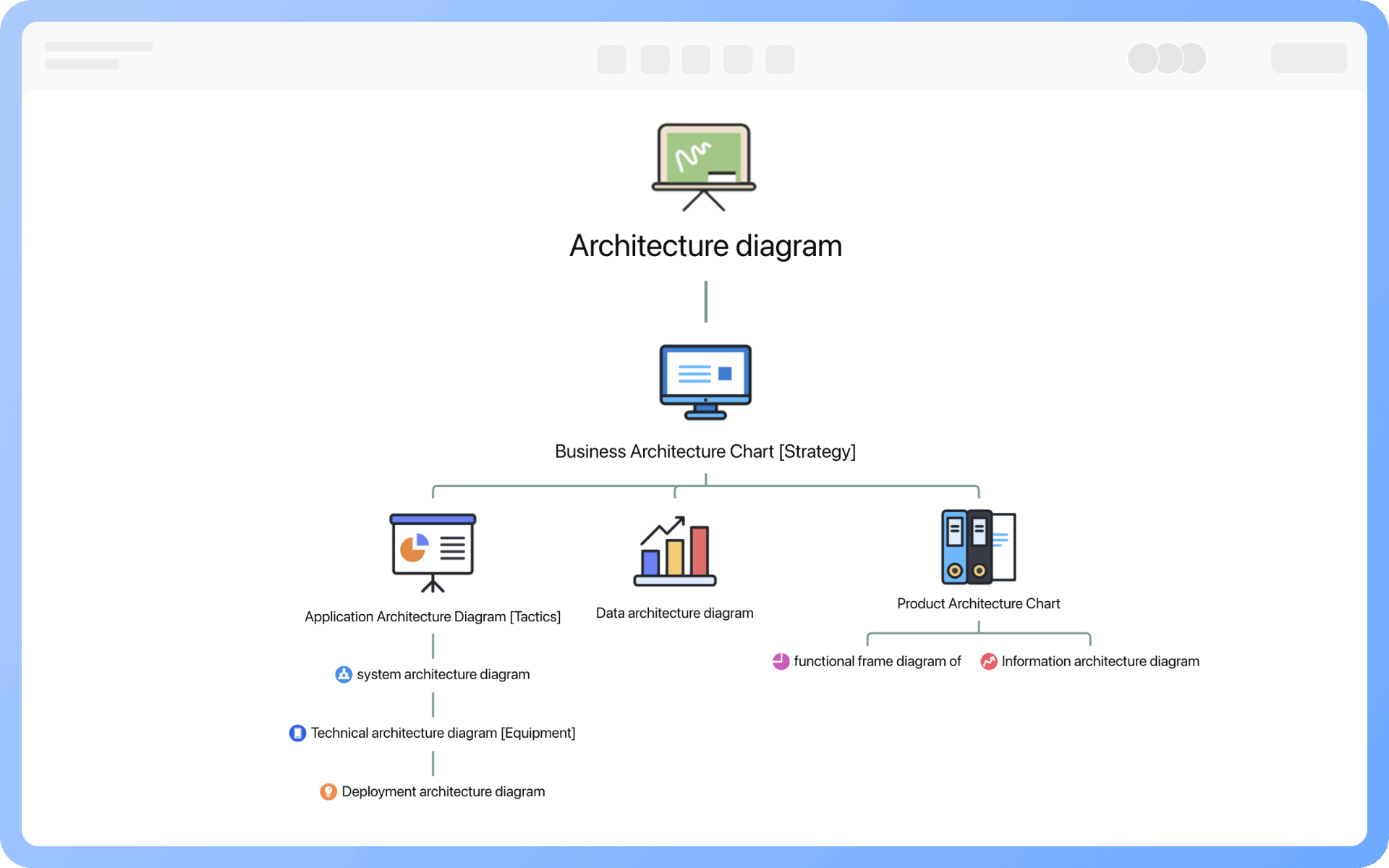
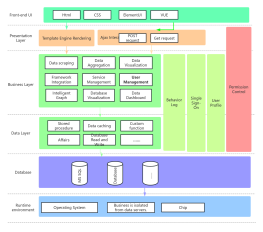
The system architecture diagram is a somewhat vague concept. In a narrow sense, it is one of the nine types of architecture diagrams, describing the various components, modules, subsystems of the system, and their interactions and communication methods, leaning more towards the physical composition and deployment method of the system. In a broad sense, a system architecture diagram can refer to any architecture diagram of a specific system, such as a CMS system product architecture diagram, which actually falls under the category of product architecture diagrams. A technical architecture diagram for a train ticket booking and refund system falls under the category of technical architecture diagrams. This page specifically refers to the narrow sense of a system architecture diagram.
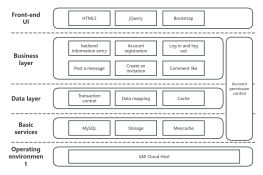
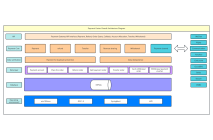
The core difference between application architecture and system architecture lies in the focus range and design level. An application architecture diagram focuses on the division of modules within the application, interaction methods, data flow, etc., leaning more towards the implementation of software functions and logic. In contrast, a system architecture diagram is more macro, focusing on the overall structure of the system, the relationships between various subsystems, hardware and software deployment, etc., leaning more towards the physical composition and deployment method of the system.
Compared to technical architecture, system architecture is a high-level description of 'what to do' and 'how to do it,' while technical architecture is a more detailed technical implementation description of 'how to do it.' If system architecture is analogous to the planning of Shenzhen City, then technical architecture is the planning of Nanshan District.
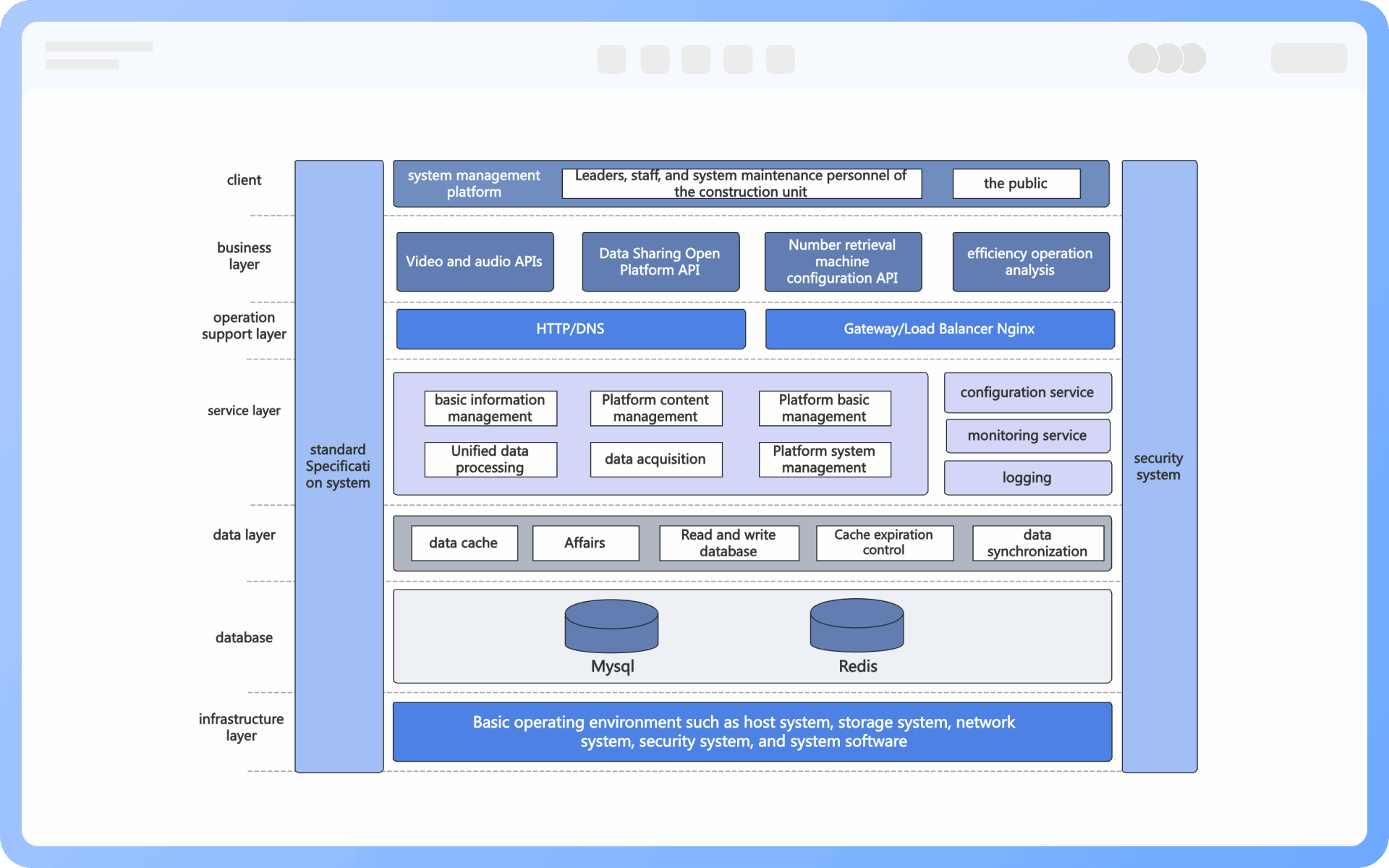
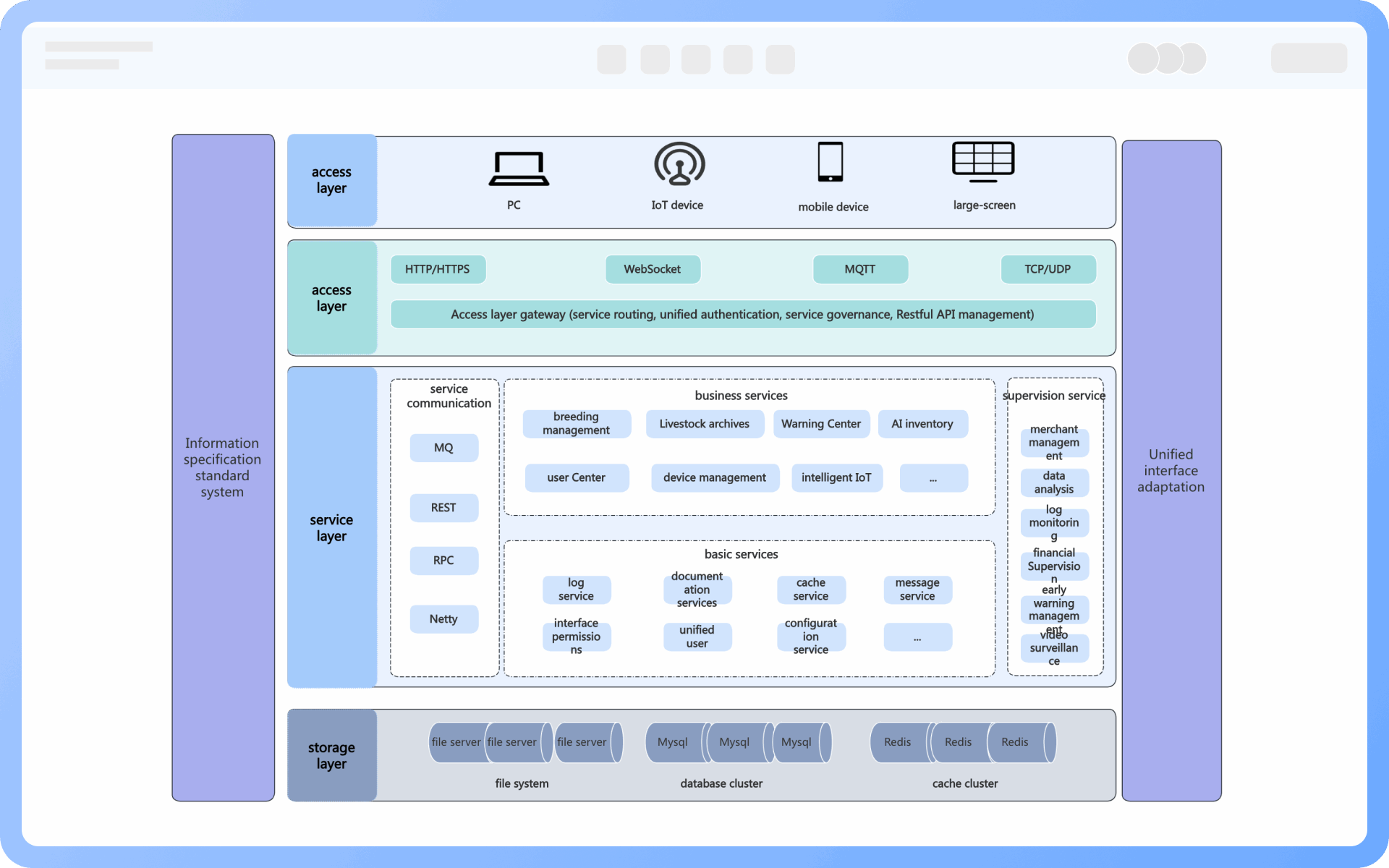
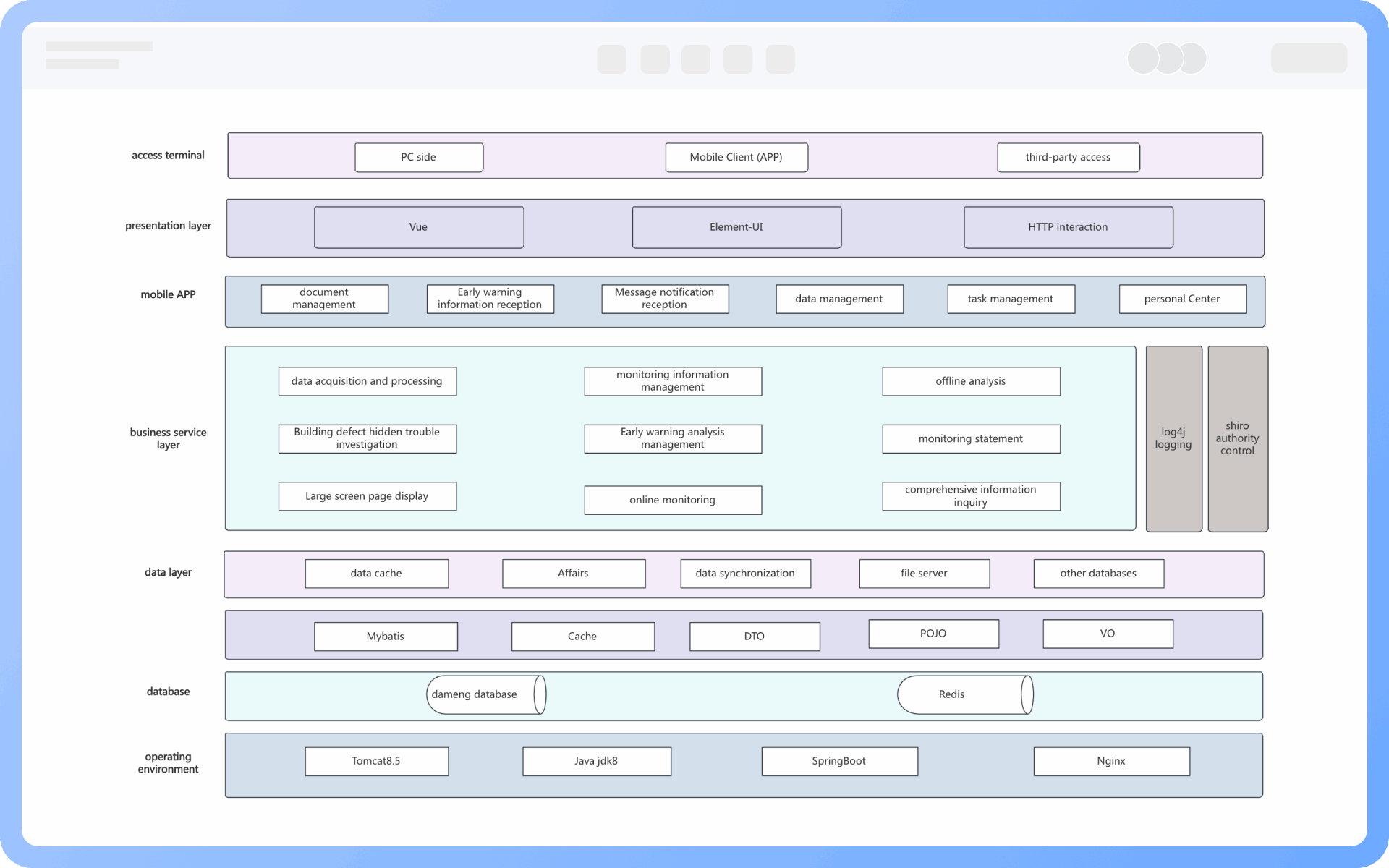
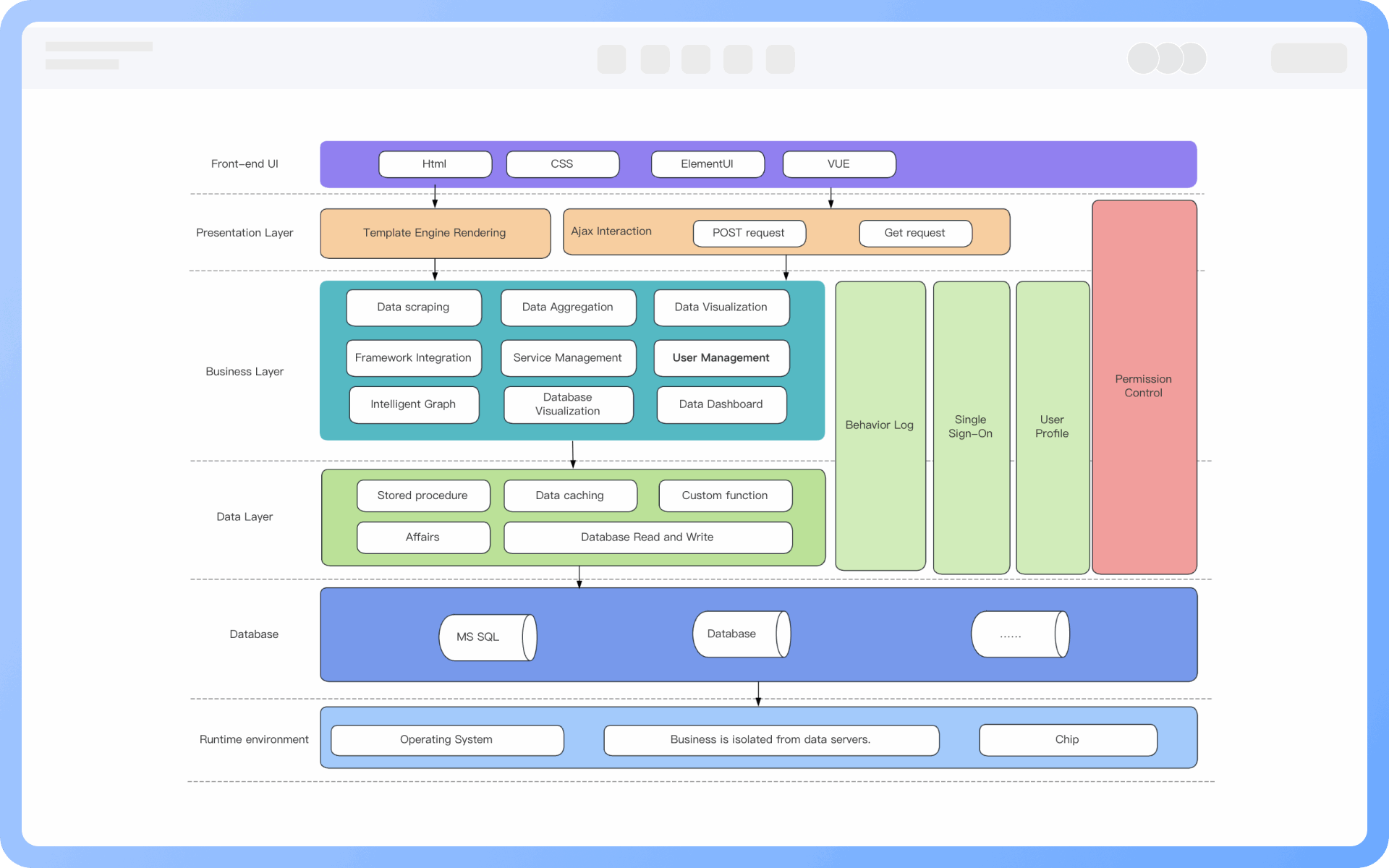
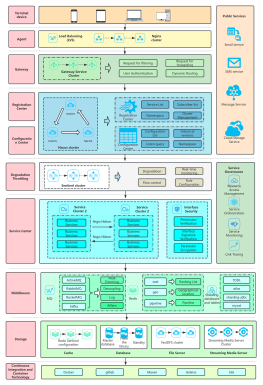
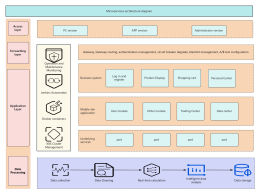
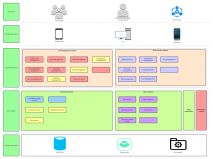
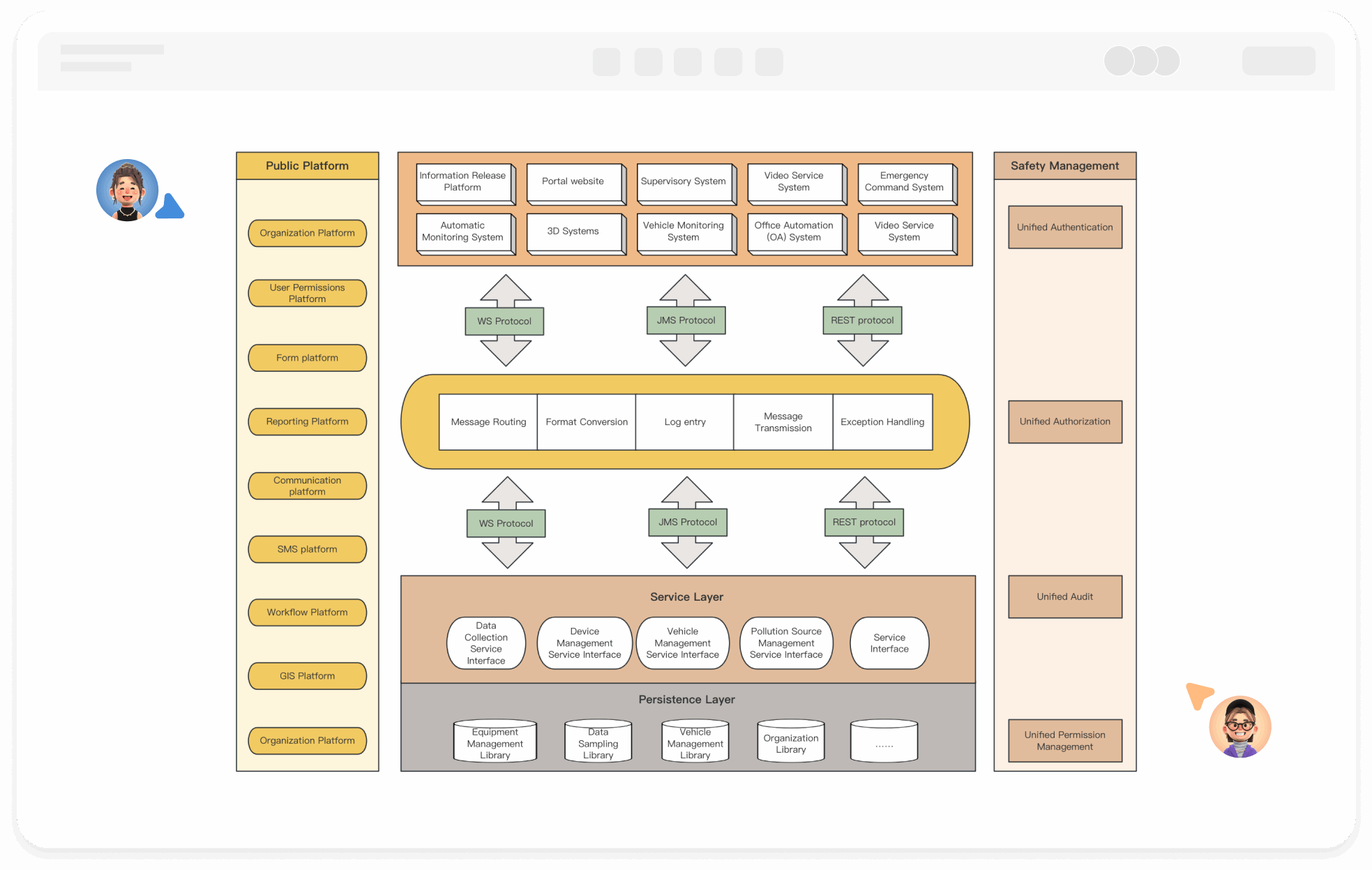
A system architecture diagram displays the overall structure of the system, including the main components, modules, relationships between services, data flow and communication methods, and the system deployment environment.
By using arrows and annotations to clearly indicate data flow direction, communication protocols (such as HTTP, RPC, message queues), and whether it is synchronous or asynchronous, enhancing the readability and accuracy of the diagram.
It depends on the actual situation. If focusing on the system's operating environment, node distribution, disaster recovery, and scalability, deployment architecture is necessary. Otherwise, a separate deployment diagram can be drawn.
It is necessary to mark the key technology stack (such as databases, middleware, caching, service frameworks) to facilitate communication of technical solutions and planning.
By marking load balancers, backup nodes, cluster architecture, failover mechanisms, etc., to showcase the system's stability and elasticity design.
It is recommended to include security-related components, such as identity authentication, access management, firewalls, data encryption, etc., to highlight the system's security.