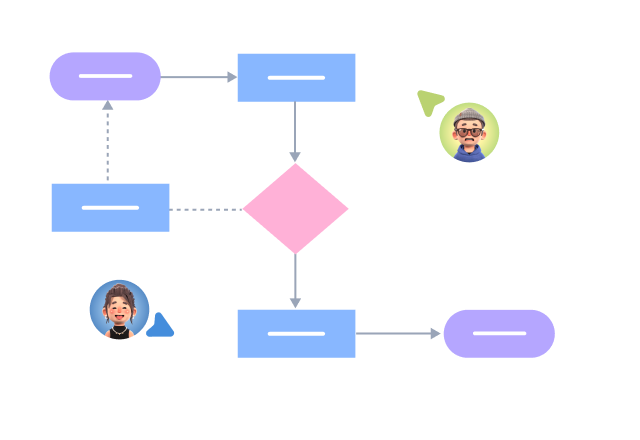


Supports real-time multi-user co-creation with shareable links for instant information transfer
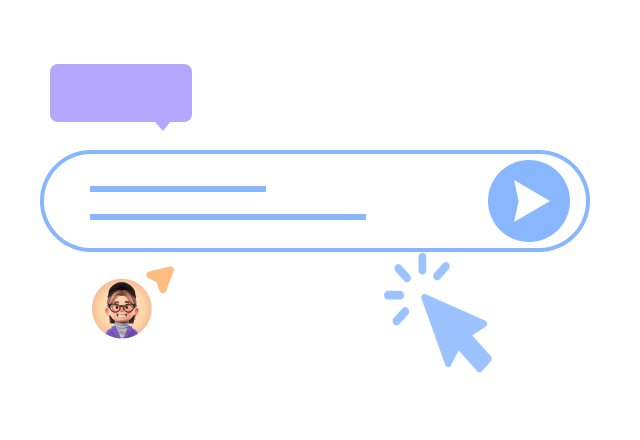
Automatically generates graphics from text input and applies style enhancements
Prebuilt themes with full customization for personalized designs
Supports icons, images, labels, LaTeX formulas, code blocks, links, attachments and more
Export: PNG, VISIO, PDF, SVG | Import: VISIO, Mermaid
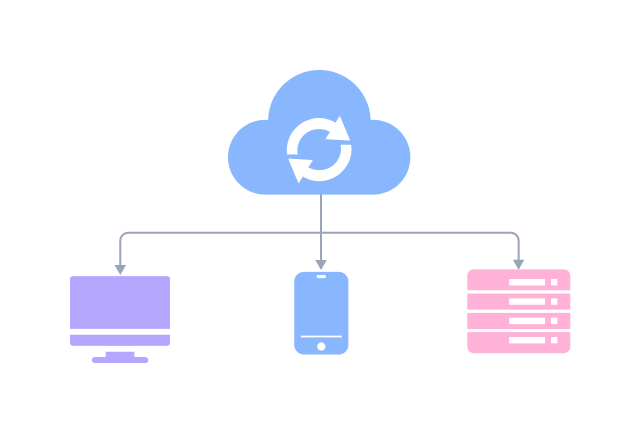
Real-time cloud storage, multi-device sync, version history, and secure data protection
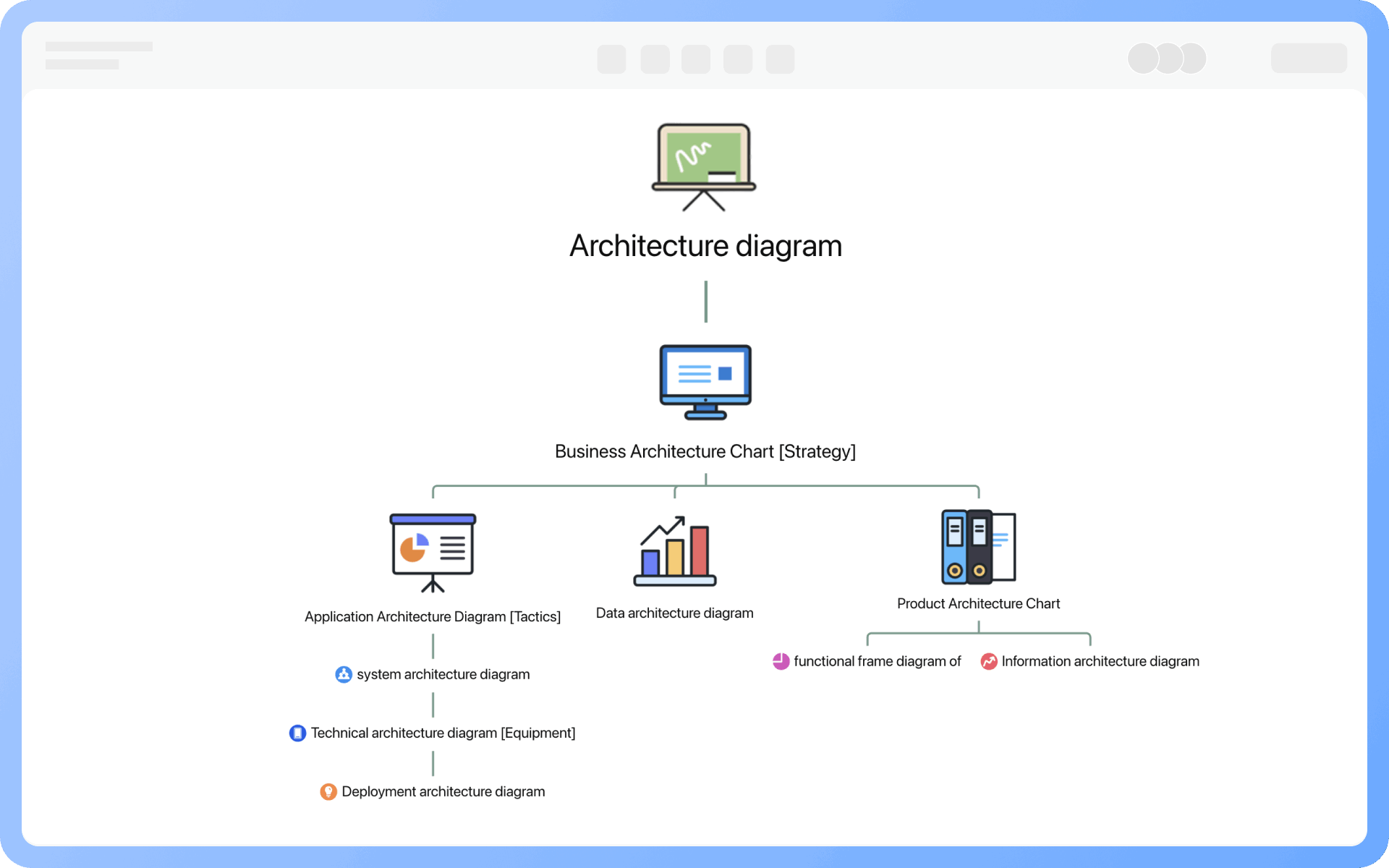
Business architecture is strategy, application architecture is tactics, and technical architecture is equipment. Among them, application architecture serves as a bridge, connecting the implementation of business architecture and influencing technical choices. Therefore, the correct process is: familiarize with the business, form a business architecture, create a corresponding application architecture based on the business architecture, and finally implement the technical architecture.
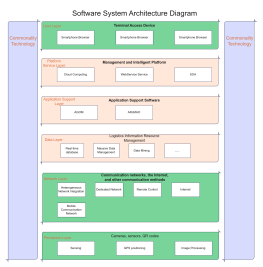
The core difference between application architecture and system architecture lies in the scope of focus and design level. Application architecture focuses on the functional implementation and technical structure of software systems, while system architecture encompasses the comprehensive design of the entire system, including hardware, software, networks, and coordinates non-functional requirements.
The choice of application architecture is influenced by business complexity, including the stage of enterprise development and business characteristics, as well as by technical feasibility, including the stage of IT technology development and the level of internal technical personnel. Business complexity inevitably brings technical complexity, and the goal of application architecture is to solve business complexity while avoiding excessive technical complexity, ensuring the implementation of business architecture.
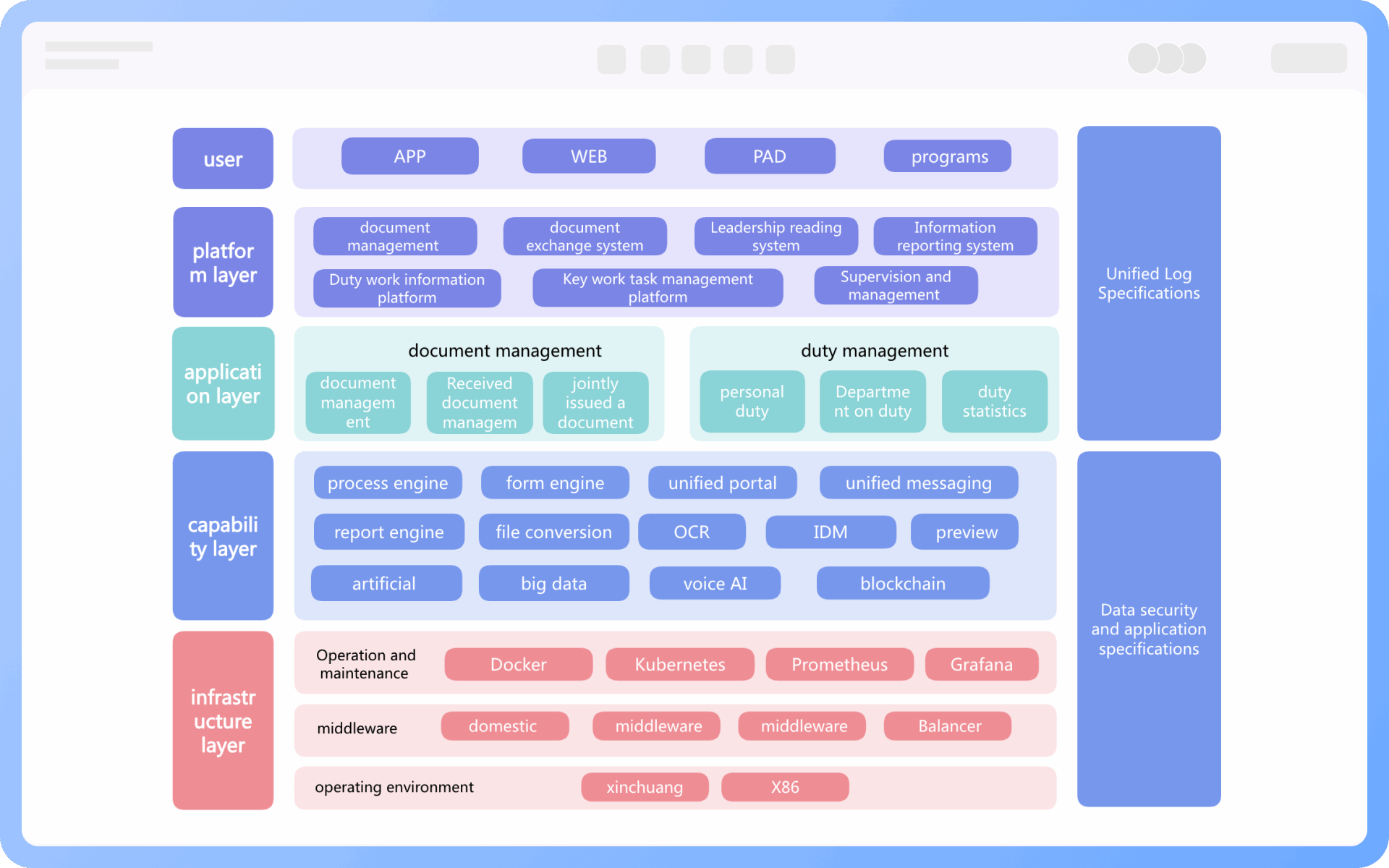
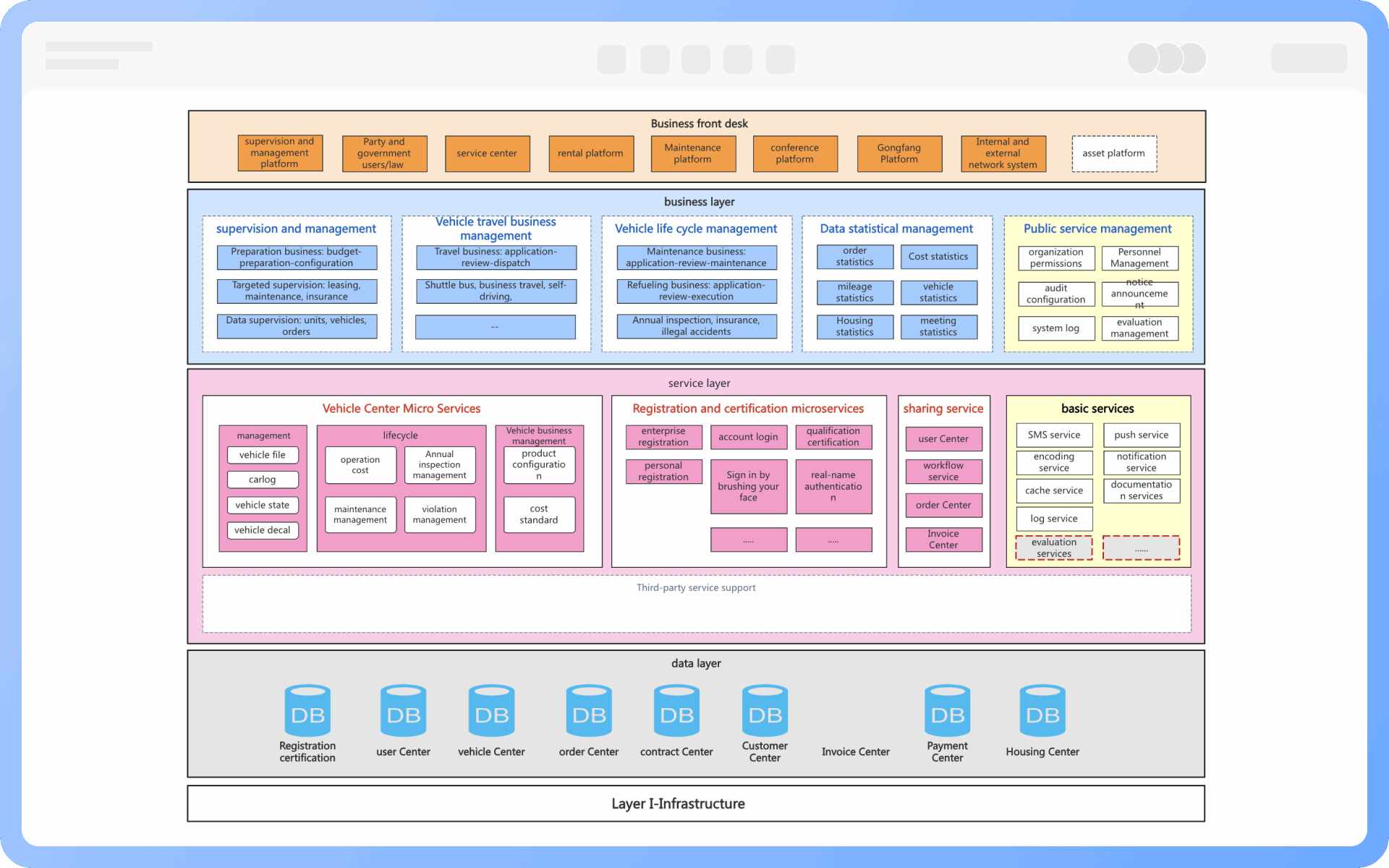
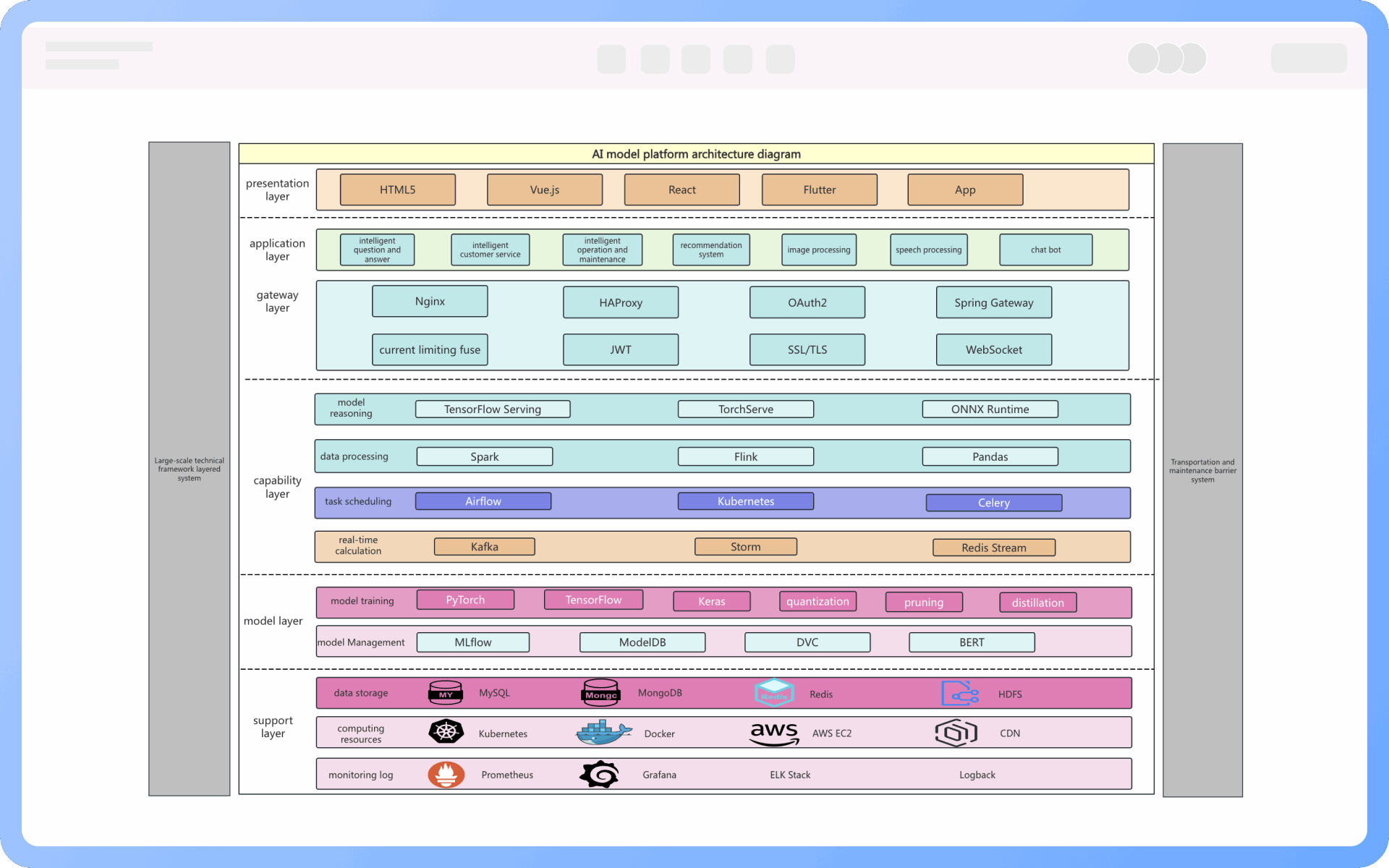
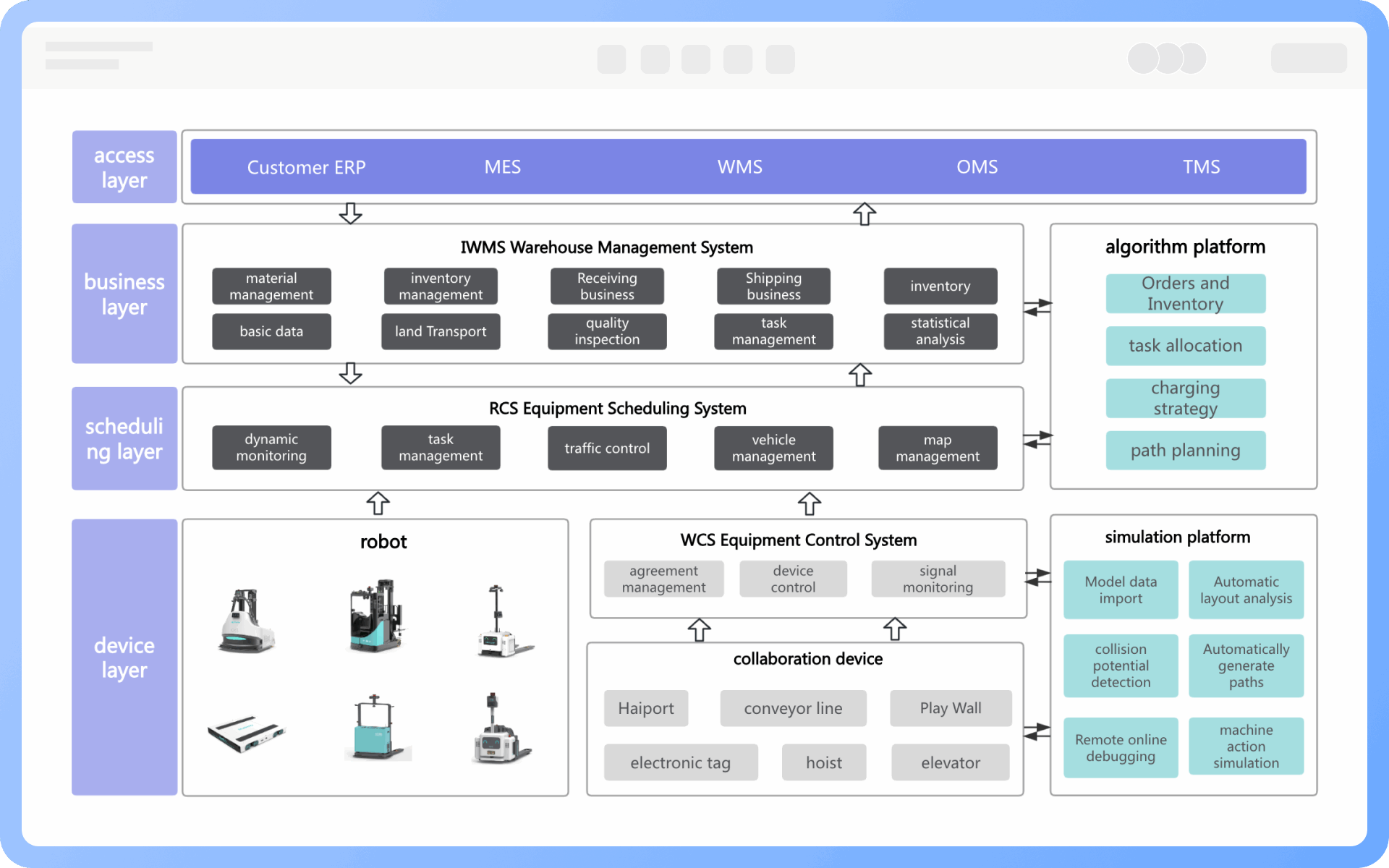
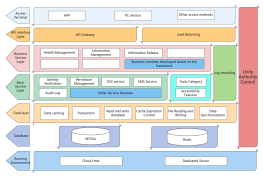
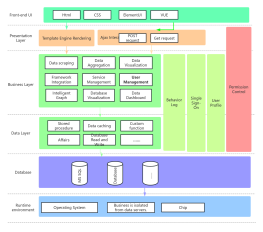
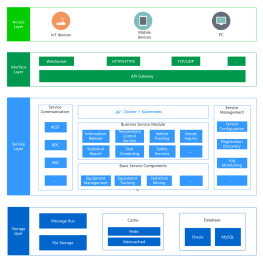
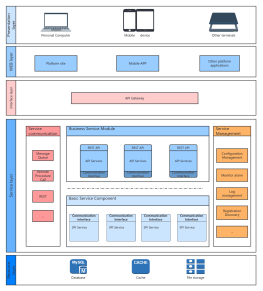
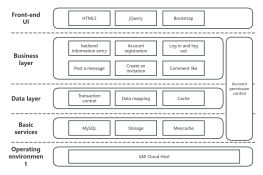
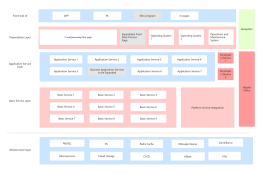
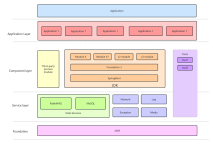
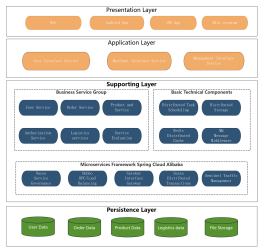
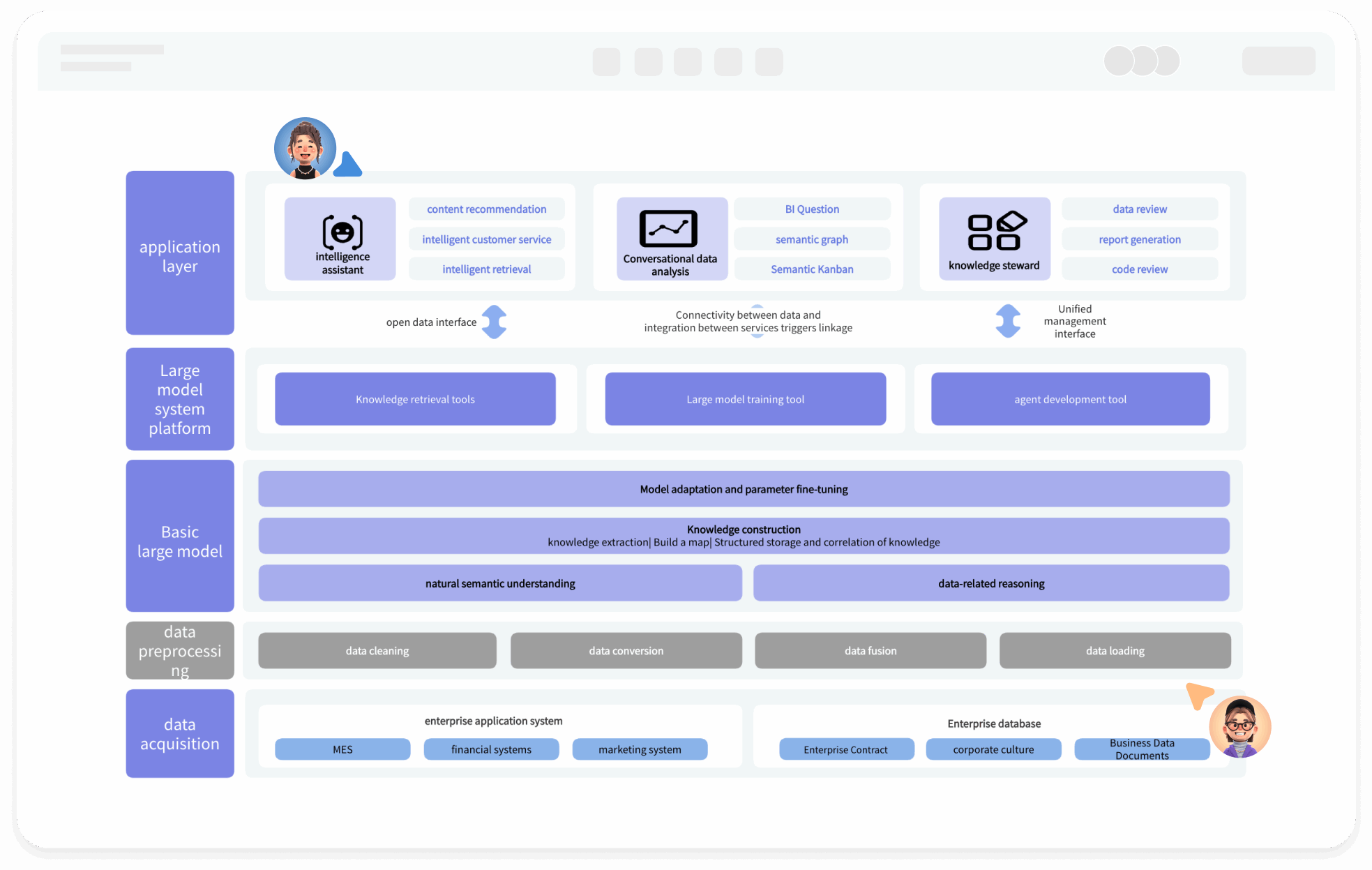
The service layer plays the role of processing core business logic in the application architecture. It is the central layer in the application architecture, mainly responsible for handling the core business logic of the application. The service layer does not directly perform any tasks but calls the data access layer for data persistence operations and returns execution results.
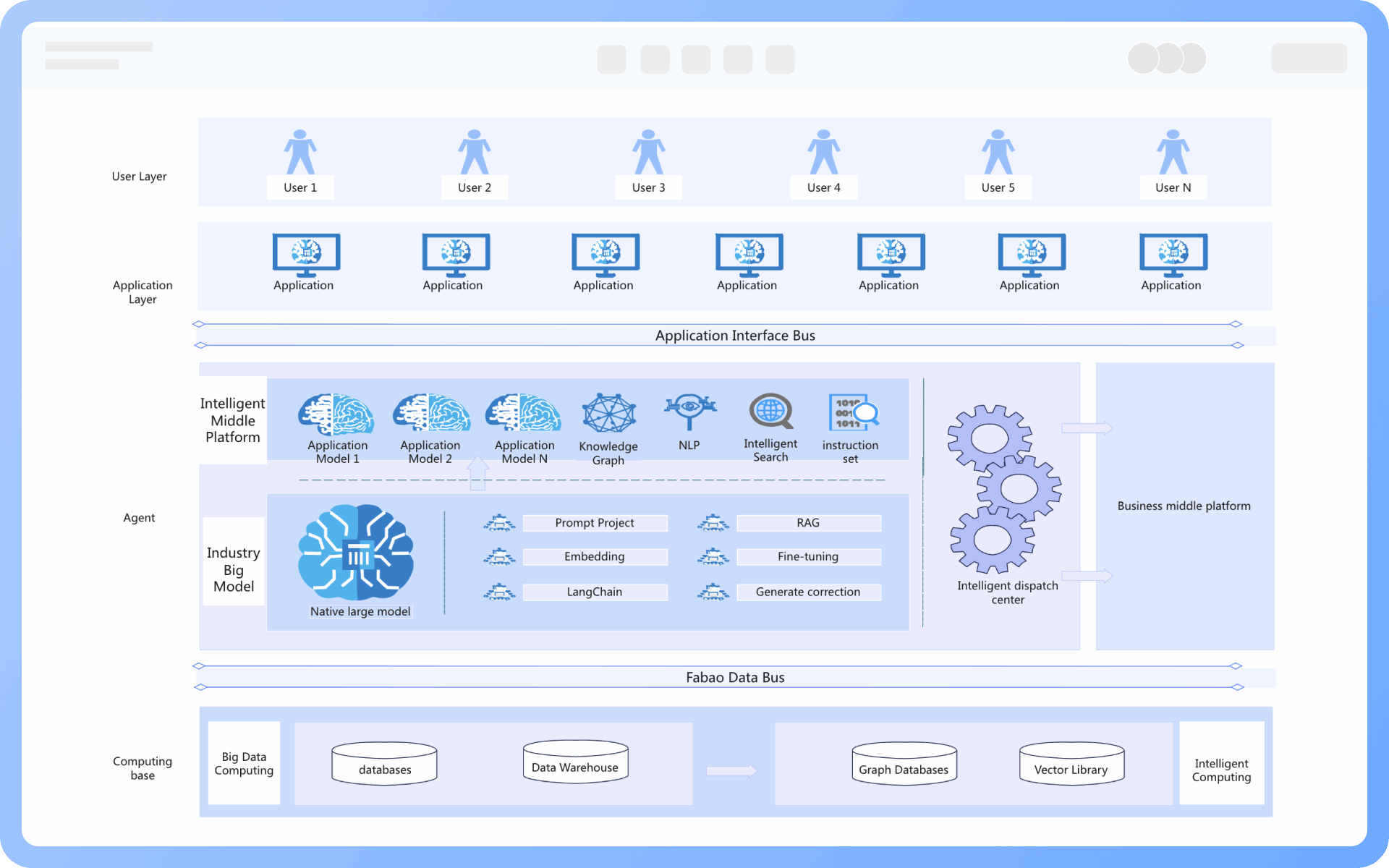
Structure: Structure is the primary element of application architecture. It defines the arrangement and combination of various components in the system. A clear structure can divide a complex software system into several relatively independent and functionally clear modules, thereby reducing system complexity and improving development efficiency.
Interaction Mechanism: The interaction mechanism stipulates how various components in the system communicate and cooperate to achieve the set functional goals. An efficient interaction mechanism can ensure smooth and unobstructed information flow between system components, reducing data transmission delays and errors, thereby improving the overall performance of the system.
1. Clear boundaries, defined interfaces
2. Understandable, maintainable, updatable
3. Supports communication, guides implementation, aids decision-making
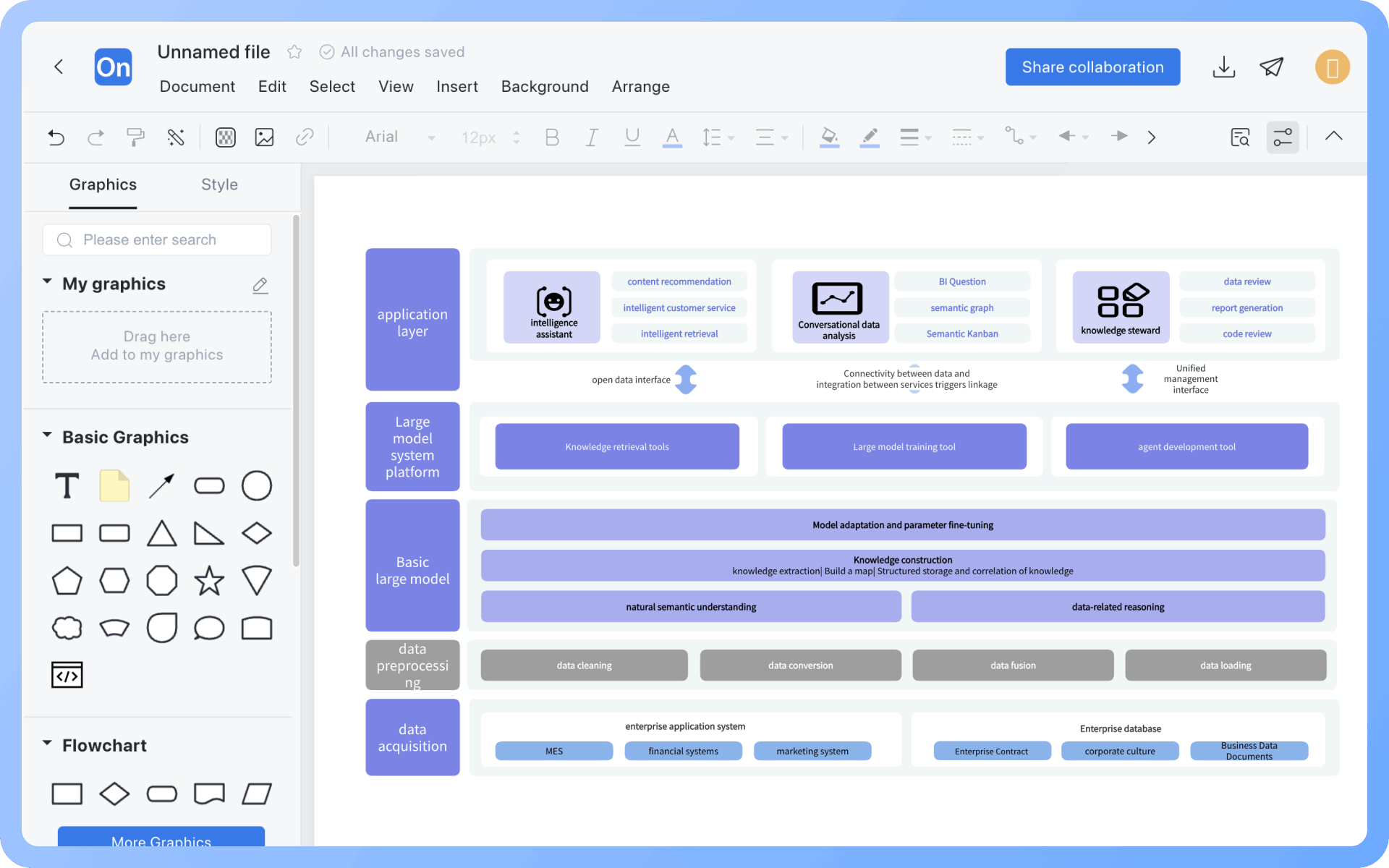
Choosing the right software tool is crucial when drawing application architecture diagrams. Different tools are suitable for different usage scenarios, user groups, and modeling depths. ProcessOn is an online drawing tool that is particularly convenient for drawing application architecture diagrams. It has built-in architectural diagram components and a vast array of application architecture diagram templates, allowing you to quickly and conveniently draw application architecture diagrams.