Process Type
Graphical expression
Mind Type
Structured expression
Note Type
Efficient expression
Treemap
Bracket Diagram

Default Mode





Backend development in 2026 is no longer a simple cycle of "writing APIs, connecting to databases, and deploying." The evolution of the technology stack is undergoing a quiet paradigm shift—Rust has been the "most popular programming language among developers" for the sixth consecutive year, and Go's enterprise adoption rate in the cloud-native infrastructure field has exceeded 70%. At the same time, AI programming assistants have evolved from "code completion" to "project-level development partners," capable of autonomously completing requirement decomposition, multi-file modification, architecture analysis, and automated testing. The boundaries between containerization and serverless are also becoming increasingly blurred, and WASM lightweight container technology is beginning to take off on the server side.
Backend developers' toolchains are evolving from a "good enough" approach to a new paradigm that prioritizes efficiency, is AI-driven, and cloud-native. Backend engineers who only know how to write CRUD interfaces are falling behind their peers who are adept at using AI tools and cloud-native technology stacks.
selects seven essential tools that backend developers will find indispensable in 2026, covering aspects such as IDE, AI programming assistant, API development, database management, and visual collaboration .
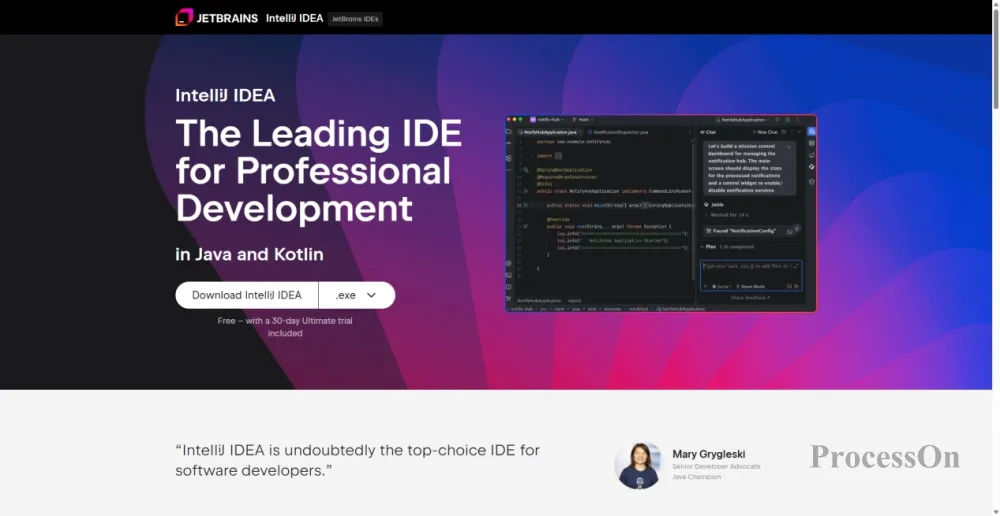
Image source: jetbrains.com
JetBrains' flagship IDE, the industry-standard for Java/Kotlin backend development, is renowned for its deep code understanding and powerful refactoring capabilities.
In the backend development field in 2026, IntelliJ IDEA Ultimate remains the IDE of choice for Java, Kotlin, and Go backend developers. Its core value lies in its deep understanding of large codebases—whether it's Spring Boot's dependency injection chain, JPA's entity relationship mapping, or complex generic inference, IDEA can provide precise code navigation, refactoring, and security checks.
Core competencies:
Deep integration with the Spring ecosystem: automatic configuration detection, runtime monitoring, and bean dependency graph visualization for frameworks such as Spring Boot, Spring Cloud, and Spring Data.
Built-in database tools: No need to switch tools, you can complete SQL writing, ER diagram viewing, and data comparison within the IDE.
Powerful refactoring capabilities: Safe refactoring operations such as renaming, method extraction, and interface abstraction are particularly reliable in large-scale projects.
Remote development support: Supports connecting to remote development environments via SSH, allowing you to obtain the same development experience locally as remotely.
Applicable scenarios: Medium to large-scale Java/Kotlin backend projects, Spring Boot microservice clusters, and enterprise-level applications requiring in-depth code analysis.
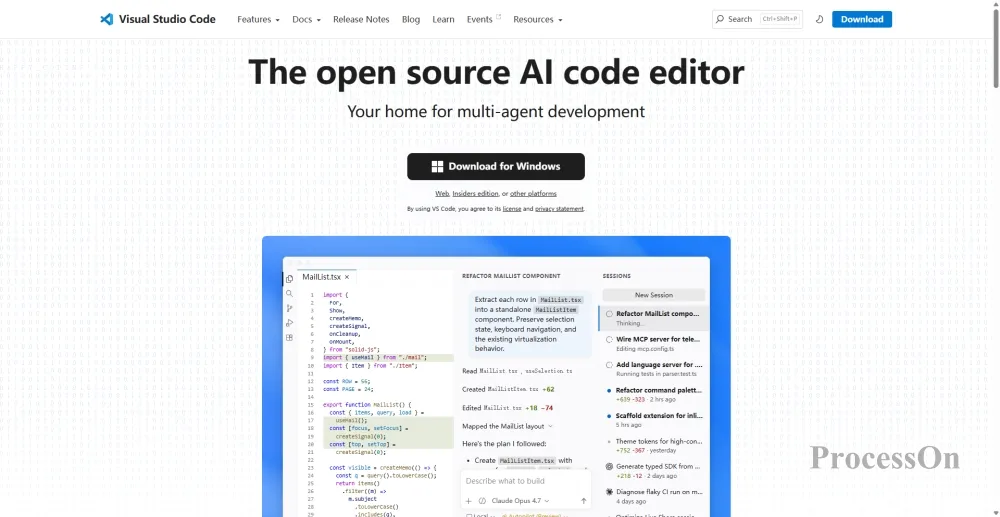
Image source: code.visualstudio.com
Microsoft's lightweight code editor is known for its rich plugin ecosystem and comprehensive cross-language support.
VS Code will remain a key choice for backend developers in 2026, especially suitable for technology stacks such as Go, Python, and Node.js. Its plugin marketplace covers the entire toolchain, from code inspection (ESLint, golangci-lint) to debugging (Debugger for Java, Python Debugger) to deployment (Docker, Kubernetes).
Recommendation: Choose IntelliJ IDEA for large Java/Kotlin projects, and VS Code for Go/Python/Node.js projects and lightweight development. The two can be used in a complementary manner.
In 2026, AI programming tools have entered the "Agent" era—they are no longer just assistants that help you complete a single line of code, but "project-level partners" capable of understanding the entire project context, autonomously modifying multiple files, analyzing architecture, and automating testing. Below are two of the most noteworthy AI programming tools in the current backend development field.
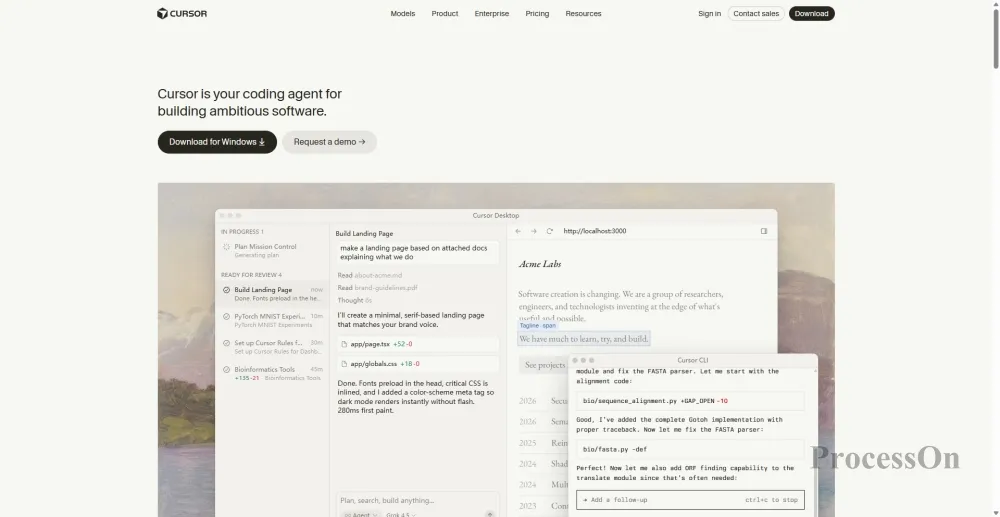
Image source: cursor.com
The AI-native IDE, which has undergone a deep overhaul of the VS Code underlying layer, is one of the most widely used AI programming tools by backend developers worldwide.
Cursor's core advantage lies in its deep overhaul of the VSCode underlying layer, resulting in a remarkably smooth experience for code completion and multi-file editing in Composer. It's more than just a code completion tool; it's an "AI partner" that understands the entire project context.
Core capabilities in backend development scenarios:
Multi-file Composer mode: Supports simultaneous modification across multiple files, making it ideal for collaborative refactoring of the API, Service, and Repository layers in backend projects.
Project context understanding: Automatically reads the entire codebase's architecture, dependencies, and interface definitions, generating code that naturally conforms to project standards.
Terminal integration debugging: Execute command-line operations directly within the editor, and use AI to assist in troubleshooting logs and debugging backend services.
Test code generation: Automatically generates unit test and integration test code based on business logic.
Applicable scenarios: daily coding, code refactoring, batch modification across files, and test code writing.
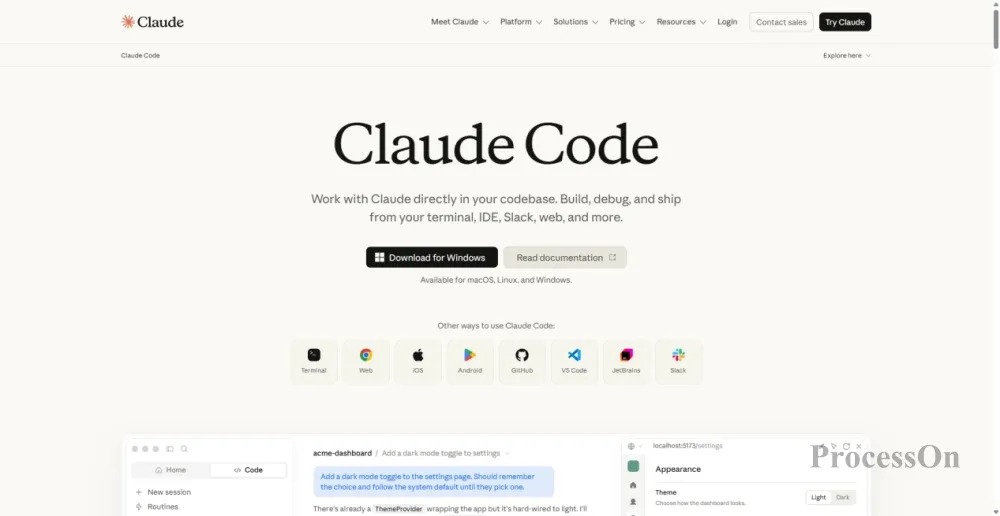
Image source: claude.com
Claude Code is an edge AI programming agent launched by Anthropic, which excels in deep reasoning, complex algorithms, and architecture-level code refactoring.
Claude Code takes a completely different approach from Cursor—it doesn't provide a graphical interface; instead, it creates a REPL directly in the terminal, treating the model like a developer with file system permissions. It's suitable for backend developers who prefer command-line interfaces and require deep reasoning.
Core capabilities in backend development scenarios:
Complex algorithm implementation: Performs exceptionally well in handling tasks requiring deep reasoning, such as distributed consistency, concurrency control, and data structure optimization.
Architectural-level refactoring: Understanding the overall project architecture design, proposing and implementing large-scale code refactoring solutions.
Long text comprehension: Capable of handling extremely long contexts and fully understanding the business logic of large backend projects.
Usage strategy: Use Cursor for daily coding (high efficiency and good integration), and switch to Claude Code when encountering technical difficulties or needing deep reasoning.
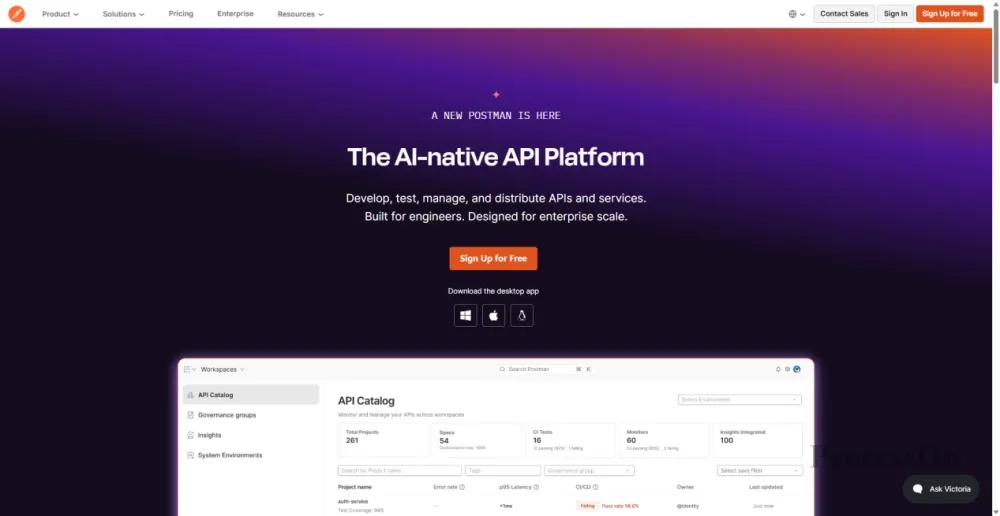
Image source: postman.com
Postman is the world's most widely used API development platform, a tool covering the entire lifecycle of API design, debugging, testing, documentation, and monitoring.
In the realm of API tools, Postman is the undisputed global standard. Used by millions of developers worldwide, from personal projects to large enterprise production-grade APIs, Postman is virtually ubiquitous . In 2026, Postman underwent its most significant upgrade since its inception—fully embracing AI-native and Git-native workflows .
Postman's core upgrades in 2026:
AI Agent Mode: Postman's AI layer is no longer a standalone assistant, but deeply integrated into the platform. It can read, write, and reason about API specifications and test cases . Agent Mode can automatically summarize APIs, diagnose problems, and apply updates. More importantly, Agent Mode can work with Git repositories, understand API sets, definitions, and underlying code, and automatically complete manual steps such as debugging, writing tests, and synchronizing code with API sets .
Native Git workflow: Developers can now directly manage API specifications, collections, tests, mocks, and environment configurations within Git repositories and their local file systems . Feature branching is supported, ensuring Postman workflows remain consistent with the code . This means that API definitions, tests, and documentation can be version-managed and reviewed just like the code itself.
API Catalog: As a central record system for APIs and services, it provides enterprise-level visibility and governance . API Catalog offers a real-time view of APIs and services—including which APIs exist, how they perform, and who is responsible—helping teams standardize API management .
Protocol extensions: Postman now supports more APIs and messaging protocols, including GraphQL, gRPC, WebSocket, Socket.IO , MQTT, MCP, and AI request types .
Applicable scenarios: API design, interface debugging, automated testing, API documentation generation, team collaboration, and API lifecycle management.
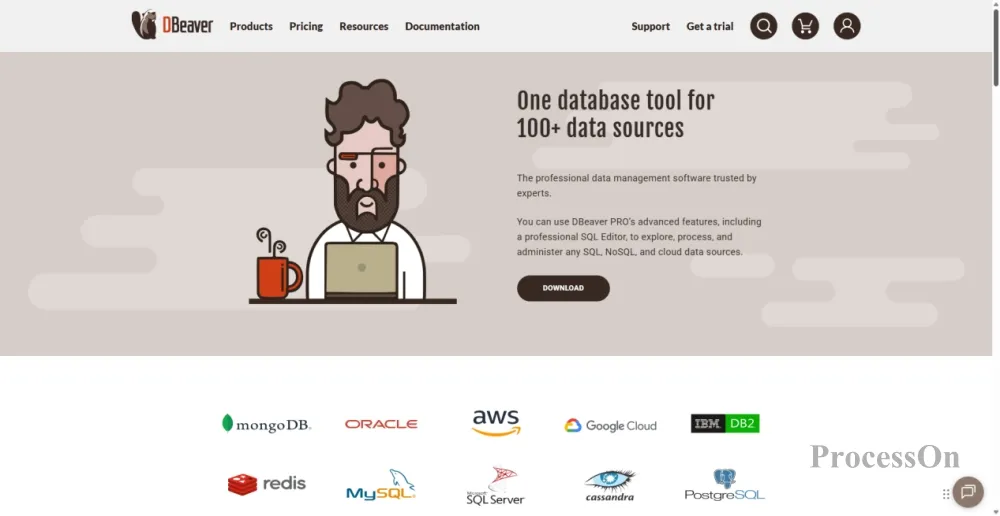
Image source: dbeaver.com
The world's most popular open-source general-purpose database tool, supporting 100+ databases, with the community edition permanently free.
DBeaver is another mainstream option besides DataGrip—it's open-source, free, and has the broadest database support. Based on JDBC drivers, it supports over 100 data sources, from MySQL, PostgreSQL, and Oracle to MongoDB, Redis, and Cassandra. In 2026, DBeaver also underwent a comprehensive upgrade in AI capabilities.
DBeaver's core capabilities in 2026:
AI Chat has been fully upgraded: DBeaver 26.0's AI Chat supports direct uploading of CSV, JSON, Parquet, SQL, XML, and XLSX files, which can be previewed as tables or directly imported into a database . AI responses support real-time streaming output and include built-in token usage statistics . Users can also configure custom AI commands to make the AI work according to their preferences .
External MCP server support: Starting with DBeaver 26.1, it supports adding external MCP servers in AI Chat . MCP servers allow AI models to acquire knowledge they don't inherently possess—for example, when an AI model is trained on an older version of PostgreSQL and is unfamiliar with the latest syntax, connecting to a dedicated Postgres MCP server can solve this problem . Users can add any number of MCP servers as needed, covering different technical fields .
dbvr CLI tool: The DBeaver family has added dbvr—an open-source command-line database management tool . dbvr can run as an MCP server , allowing AI tools such as Claude CLI to browse database directories, read table structures, and execute SQL queries via the MCP protocol . It supports the Apache License 2.0 open-source license .
Applicable scenarios: Teams that need to manage multiple databases, developers who pursue open source and free technologies, adaptation of domestic databases in the context of information technology innovation, and DBAs who prefer CLI workflows.
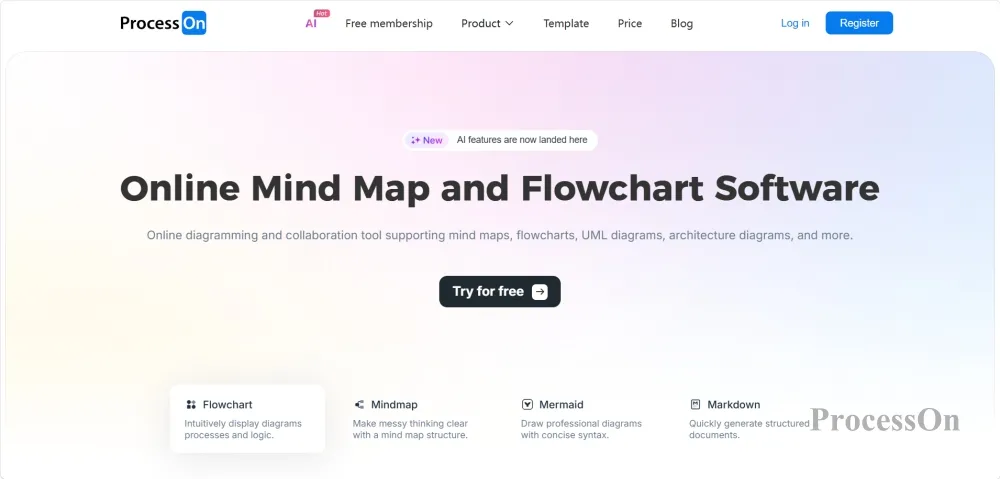
ProcessOn is a one-stop online diagramming and collaboration platform that covers the entire visualization needs of backend development, from architecture design, database modeling, API design to project management.
Backend development is more than just writing code—architecture design, database ER modeling, API protocol design, system deployment planning, team scheduling and collaboration—each step requires clear visual representation. ProcessOn was created precisely to meet this need.
What can ProcessOn do throughout the entire backend development process?
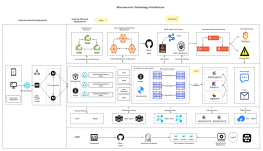
During the architecture design phase, backend architects can use system architecture diagrams and deployment diagrams to design microservice layered architectures, service call relationships, and deployment topologies. The ProcessOn template community provides ready-made templates such as "Backend Technology Architecture Panorama" and "Spring Cloud Microservice Architecture," which can be cloned and used with a single click. Its AI generation function supports automatically generating architecture and deployment diagrams from text descriptions.
Database design phase: Use ER diagrams (Entity-Relationship Diagrams) to design database table structures, field relationships, and indexing strategies. ProcessOn provides complete ER diagram drawing capabilities and supports standard notation systems for entities, relationships, and attributes.
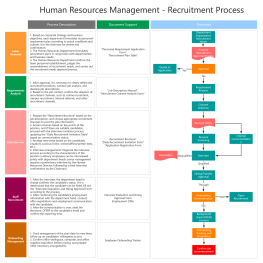
During the API design phase, sequence diagrams and flowcharts are used to outline the API call chain, business process, and exception handling logic. Backend developers can use sequence diagrams to align the API protocol with the frontend, avoiding the embarrassment of discovering inconsistencies during integration testing.
Project management phase: Use Gantt charts to plan backend iteration schedules and milestones, and use mind maps to organize technology selections and dependencies. ProcessOn supports real-time collaboration among multiple team members, allowing them to collaboratively edit the same project planning diagram.
ProcessOn's core advantages:
Extensive template library: covering dozens of backend scenario templates including backend architecture diagrams, microservice architecture diagrams, ER diagrams, sequence diagrams, and deployment diagrams.
Supports multiple chart types: flowcharts, mind maps, ER diagrams, sequence diagrams, deployment diagrams, Gantt charts, UML diagrams, etc.
AI-powered: Enter keywords to generate professional charts.
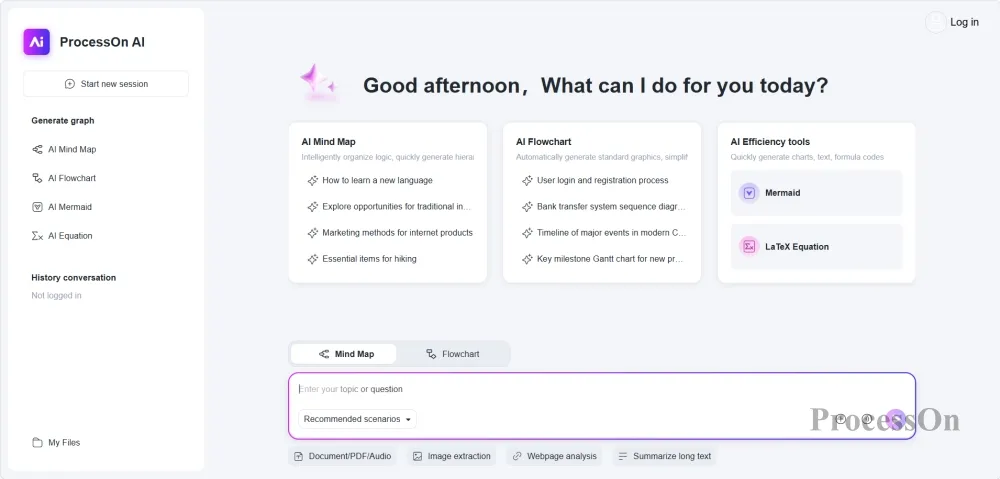
Team collaboration: Supports real-time online collaboration and version control for multiple users.
Applicable scenarios: backend architecture design, database ER modeling, API interface design, system deployment planning, project scheduling management, and technical documentation accumulation.
Q1: What tools should a backend development novice start learning in 2026?
A: I recommend starting with four tools: ① IntelliJ IDEA or VS Code – master the basic operation and debugging skills of an IDE; ② Git + GitHub – version control is an essential skill for team collaboration; ③ Apifox or Postman – learn interface debugging and API documentation management; ④ ProcessOn – learn to use architecture diagrams and ER diagrams to organize system design and data models. After building a solid foundation, gradually try AI programming tools such as Cursor.
Q2: How should I choose between Cursor and Claude Code?
A: Cursor is a native AI IDE, suitable for daily coding, debugging, and refactoring, with a highly integrated graphical interface. Claude Code is an endpoint AI agent, suitable for handling complex algorithms, architectural refactoring, and tasks requiring deep inference. The recommended strategy is to use Cursor for daily coding and switch to Claude Code when encountering technical challenges or requiring deep inference. TRAE is more suitable for teams pursuing "end-to-end AI from requirements to delivery."
Q3: What are the differences between Apifox and Postman?
A: Postman's core function is as a professional HTTP request client, requiring all API information to be manually entered and maintained. Apifox, on the other hand, is an API lifecycle collaboration platform that integrates four key capabilities: documentation (similar to Swagger), debugging (similar to Postman), mock testing, and automated testing. If a team only needs API debugging, Postman is sufficient; if they need integrated documentation, debugging, and testing, Apifox is more efficient.
Q4 : What specific problems can ProcessOn solve in backend development?
A: ProcessOn helps backend teams transform "invisible thinking" into "visible consensus." Specifically: ① Architecture Design – Visualize microservice layering, call relationships, and technology selection using architecture diagrams, eliminating miscommunication during solution reviews; ② Database Design – Draw table structures, field relationships, and indexing strategies using ER diagrams, ensuring complete consistency in understanding the data model between frontend and backend; ③ API Design – Use sequence diagrams to outline API call chains and align protocols with the frontend; ④ Project Scheduling – Plan iterations and milestones using Gantt charts. A single diagram explaining system design is worth more than a thousand words of documentation.
Q5 : What new skills must backend developers master in 2026?
A: I suggest focusing on three areas: ① Mastering AI programming tools (Cursor, Claude Code, TRAE, etc.) to transform AI into daily coding productivity; ② Mastering cloud-native technology stacks (Go, Kubernetes, containerization) to understand engineering practices in the cloud-native era; ③ Mastering visual collaboration tools (such as ProcessOn) to improve cross-team communication and documentation capabilities.