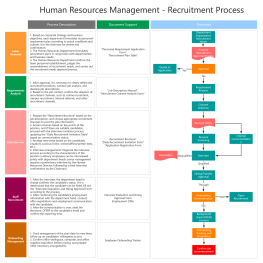
Process Type
Graphical expression
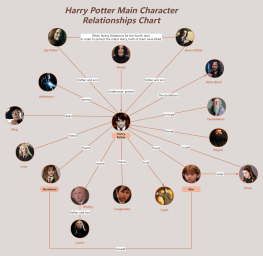
Mind Type
Structured expression
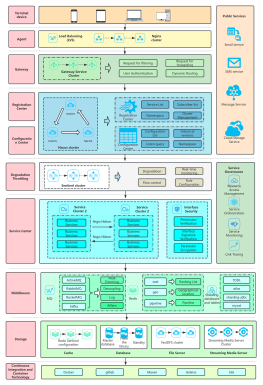
Note Type
Efficient expression
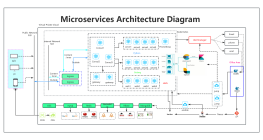
Treemap
Bracket Diagram

Default Mode





With summer vacation approaching, how do you plan to spend your summer?
Some people choose to lie down completely, binge-watching TV shows and playing games until the early hours of the morning; some are bombarded with tutoring classes and extracurricular activities by their parents, which is more tiring than going to school; and some people set ambitious goals—"I want to lose weight," "I want to learn a new skill," "I want to read ten books"—but two months later, all their goals have fallen apart.
Where does the problem lie? It's not a lack of effort, but a lack of systematic planning.
Summer vacation is the longest period of uninterrupted free time in the year, lasting from one or two months to more than two months. If you treat it as a "project" that needs to be managed, you will find that those who have a fulfilling and rewarding summer vacation are often not exceptionally gifted, but rather adept at turning vague desires into clear plans.
Many people's summer vacation plans fail because they started off wrong. They created a "to-do list" instead of a "goal system."
"Memorize 50 words every day," "Go to the gym three times a week," "Read three books"... These are not goals , but tasks. Tasks without direction are like walking in the dark; you'll give up after a few steps.
The correct approach is to first draw a mind map, breaking down your summer vacation aspirations into several core components.
Personal Growth: After this summer vacation, in what ways do I hope to be different? Will my English improve? Or will I have mastered a new skill?
Health management: Is your daily routine regular? Do you have an exercise plan? Is your diet healthy?
Interest Exploration: Is there anything you've always wanted to do but haven't had time for? Learning guitar? Practicing drawing ? Making vlogs?
Social and Family: How often do you see your friends? What plans do you have with your family? Do you have any travel plans?
Academic/Work Preparation: Should I preview next semester's courses? Do I have any internship or part-time job plans?
Each branch can be further broken down. For example, under "Personal Growth," sub-branches such as "Reading List," "Skills Learning," and "Online Courses" can be developed.
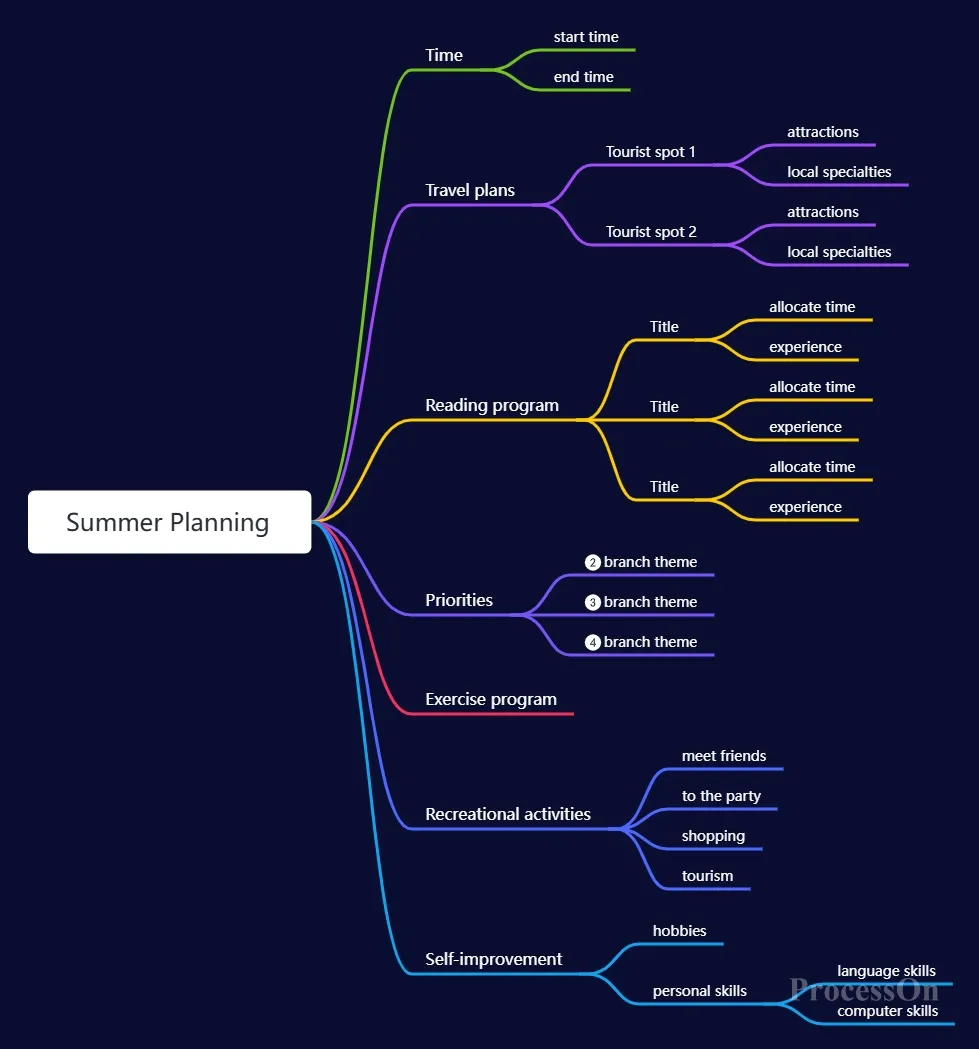
Why draw a diagram first instead of just making a list?
Because of the radial structure of mind maps, they naturally match the brain's associative patterns. They allow you to see the big picture first, then focus on the details, instead of being overwhelmed by trivial tasks right away. When you lay out all your ideas on a map, you'll discover what you truly care about, what others think you should do, and what you truly want to do.
You have a blueprint, but if you only have a mind map, it's still just a "wish list." The next step is to break down your wishes into timelines.
This is where timelines and Gantt charts come in handy.
Let's say your summer vacation is 8 weeks long. Divide the timeline into 8 segments, and mark each weekend with a "milestone"—
Weekend 1: Finalize the summer plan, and ensure all books and course resources are in place.
Weekend 2: Finish reading the first book and complete the first module of the course.
Weekend 3: Initial establishment of an exercise habit (exercising 3 times a week for two consecutive weeks).
Weekend of Week 4: Mid-term review and plan adjustments
...
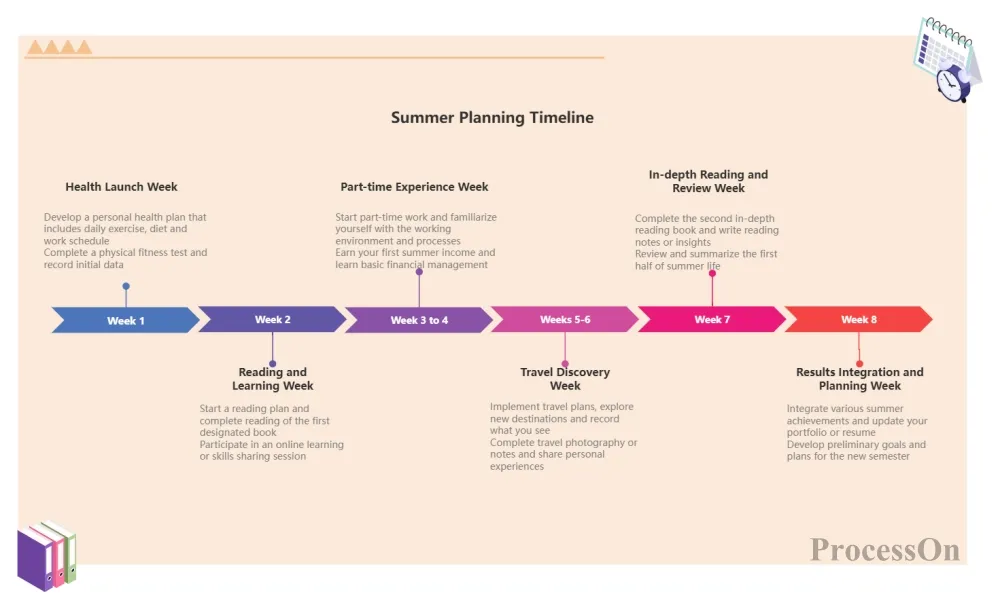
The advantage of a timeline is that it transforms "I will do this in two months..." into "I will do this weekend...". Lofty goals may seem unattainable, but when broken down into weekly and daily goals, they become achievable.
Summer vacation isn't a one-dimensional affair. You might be doing several things simultaneously: reading, learning new skills, exercising, and preparing for an internship. It's difficult to see the overlaps and conflicts between different tasks using only a single timeline.
This is where Gantt charts come in handy. The horizontal axis represents time (weeks), and the vertical axis represents tasks (reading, exercise, learning, socializing, etc.). Each task is represented by a horizontal bar indicating its start and end time.
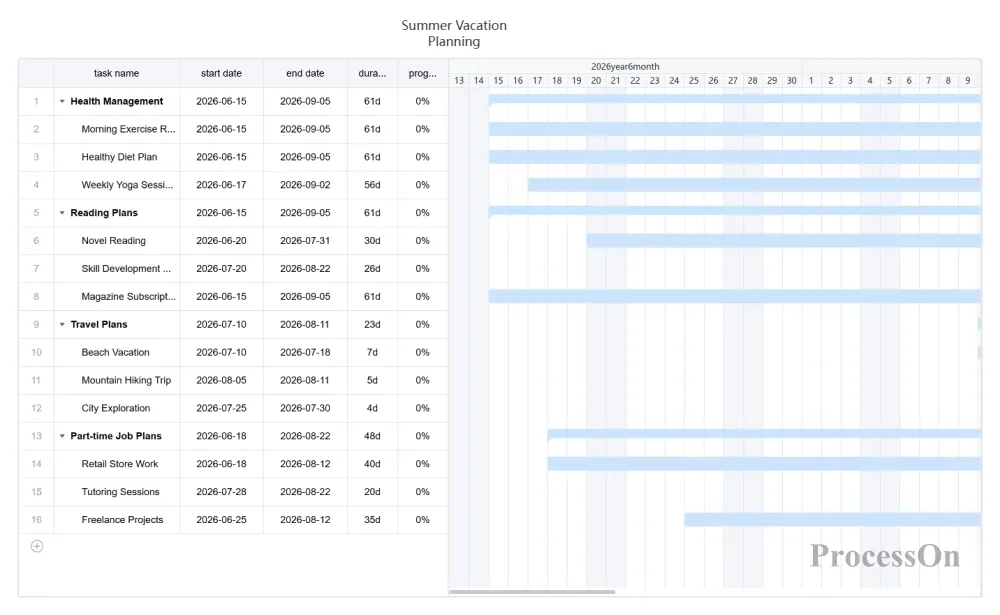
Summer vacation planning Gantt chart
ProcessOn's charting tool includes a built-in Gantt chart template that you can use directly. Simply add rows (task names) on the left and set the planned time for each module. You can also mark the progress of the plan each week .
Once you draw a Gantt chart, your summer vacation will no longer be "I want to do these things," but "I will do this at this time"—from a wish to a plan, and from a plan to a schedule.
No matter how well a plan is made, deviations are bound to occur during execution. Some people give up completely because the plan cannot keep up with changes, while others stubbornly stick to their path, refusing to adjust even when the direction is clearly wrong.
The correct approach is to pre-plan review sessions in the schedule.
You can divide the summer vacation into several phases, and set a "review and decision-making point" after each phase.
Ask yourself three questions during the debriefing:
What did I accomplish during this phase? (Speak with data and facts, not feelings)
What difficulties were encountered? (Was the plan too aggressive? Or were there external interferences?)
How should we adjust for the next stage? (Continue, optimize, or abandon?)
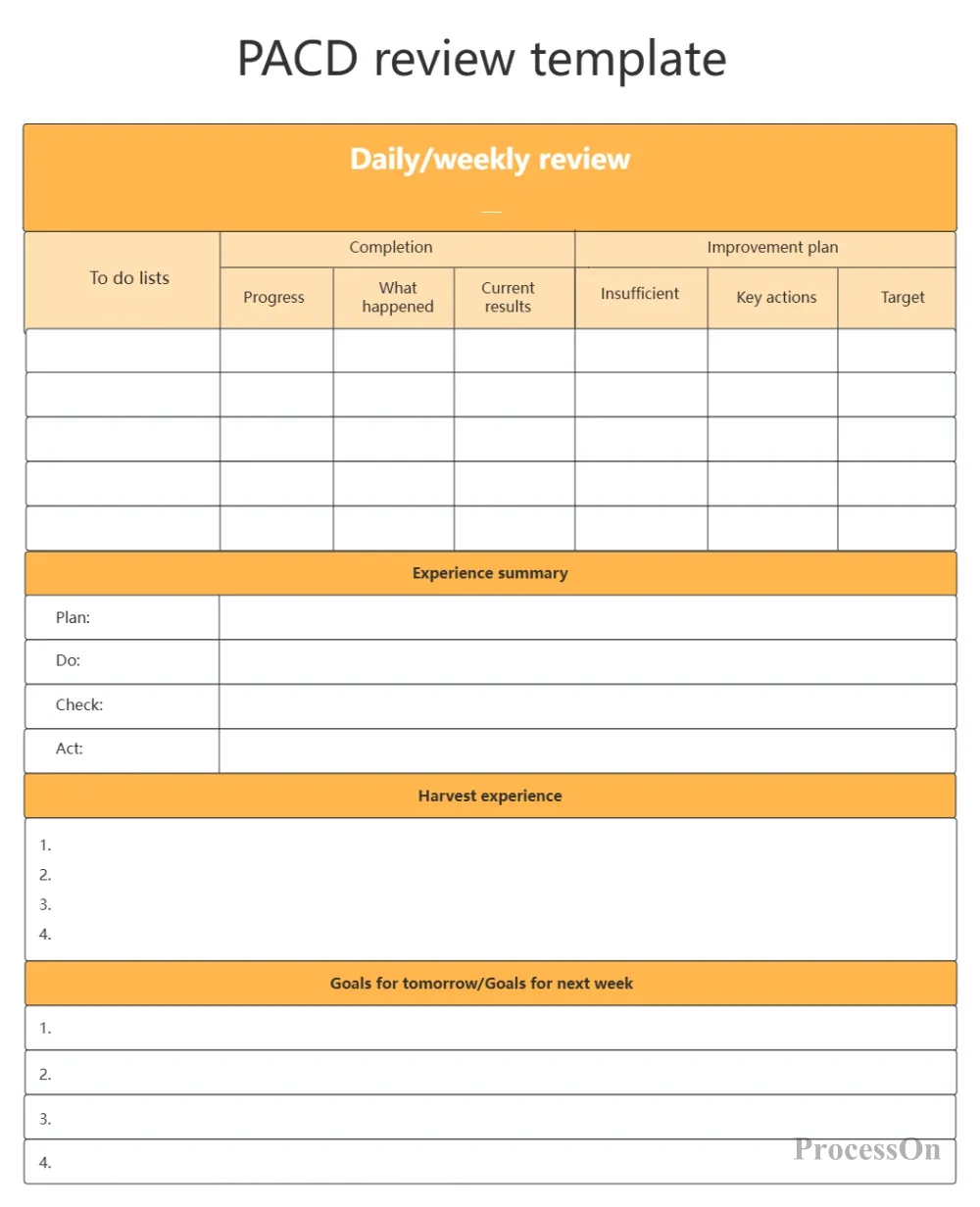
The ProcessOn community offers a wealth of summer planning templates, including summer planning mind maps, summer reading list suggestions, summer plan timelines, Gantt charts, and more. You can refer to these templates and modify them to create your own summer plan.
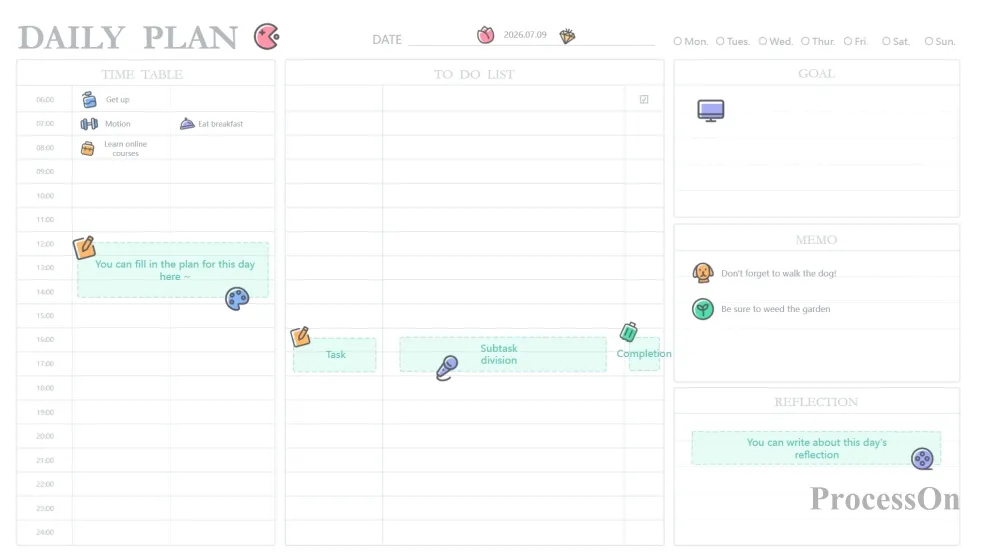
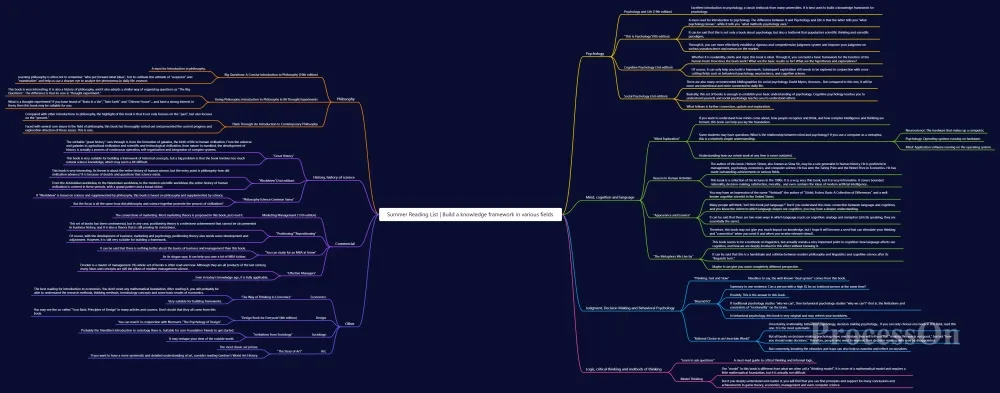
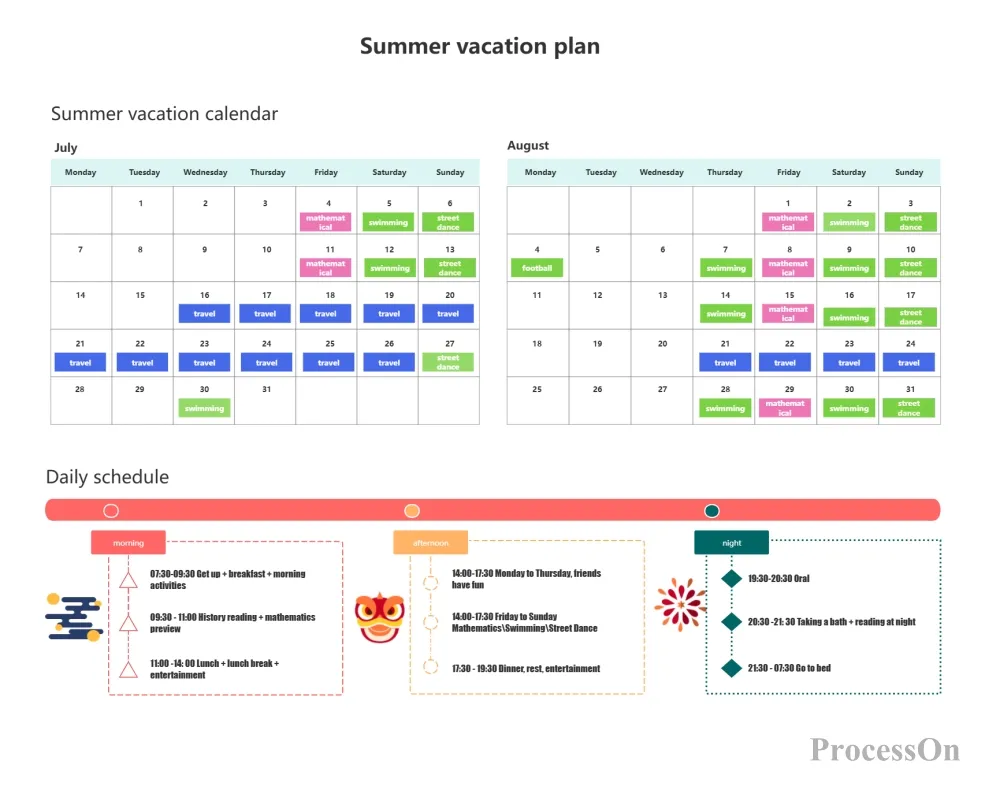
Student Summer Vacation Study and Life Plan
Whether your summer vacation is fulfilling or not never depends on how "busy" you are, but on how you spend your time. When you break down your goals into mind maps, draw your schedule into Gantt charts, and create review diagrams of your learning, your summer vacation transforms from a vague "two months" into a clear, actionable, and trackable battle map.
Use ProcessOn charting tools to spend an afternoon drawing out your summer vacation. Then, follow this chart to execute, track, review, and adjust your plans. Two months later, when the new semester begins, you can clearly see where you went, how many books you read, what habits you developed, and what skills you learned this summer—instead of vaguely feeling like you "didn't do anything."
 Following the tutorial to try
Free to use ProcessOn
Following the tutorial to try
Free to use ProcessOn