Process Type
Graphical expression
Mind Type
Structured expression
Note Type
Efficient expression
Treemap
Bracket Diagram

Default Mode





Graduation season is a time of both anticipation and hectic activity. The thesis isn't finalized, the resume hasn't been submitted, and interviews are already piling up… How can you manage everything in a limited amount of time? The answer might lie hidden in a series of charts. This article provides a "Visualized Graduation Survival Guide," using 5 core charts to help you navigate every step from your thesis to your career.
Many students struggle with their graduation theses because despite conducting extensive research, their logic remains disjointed. When their advisor asks, "What is your research approach?", they stammer and struggle to articulate their thoughts. In such cases, a technical roadmap can help establish the framework of the entire thesis.
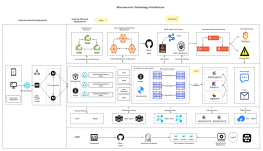
A technology roadmap is a flowchart that illustrates research steps, methods, and expected outcomes. It typically starts with the research background and follows a main axis of "problem identification → literature review → program design → experiment/survey → data analysis → conclusions and recommendations," clearly marking the key tasks and outputs of each stage.
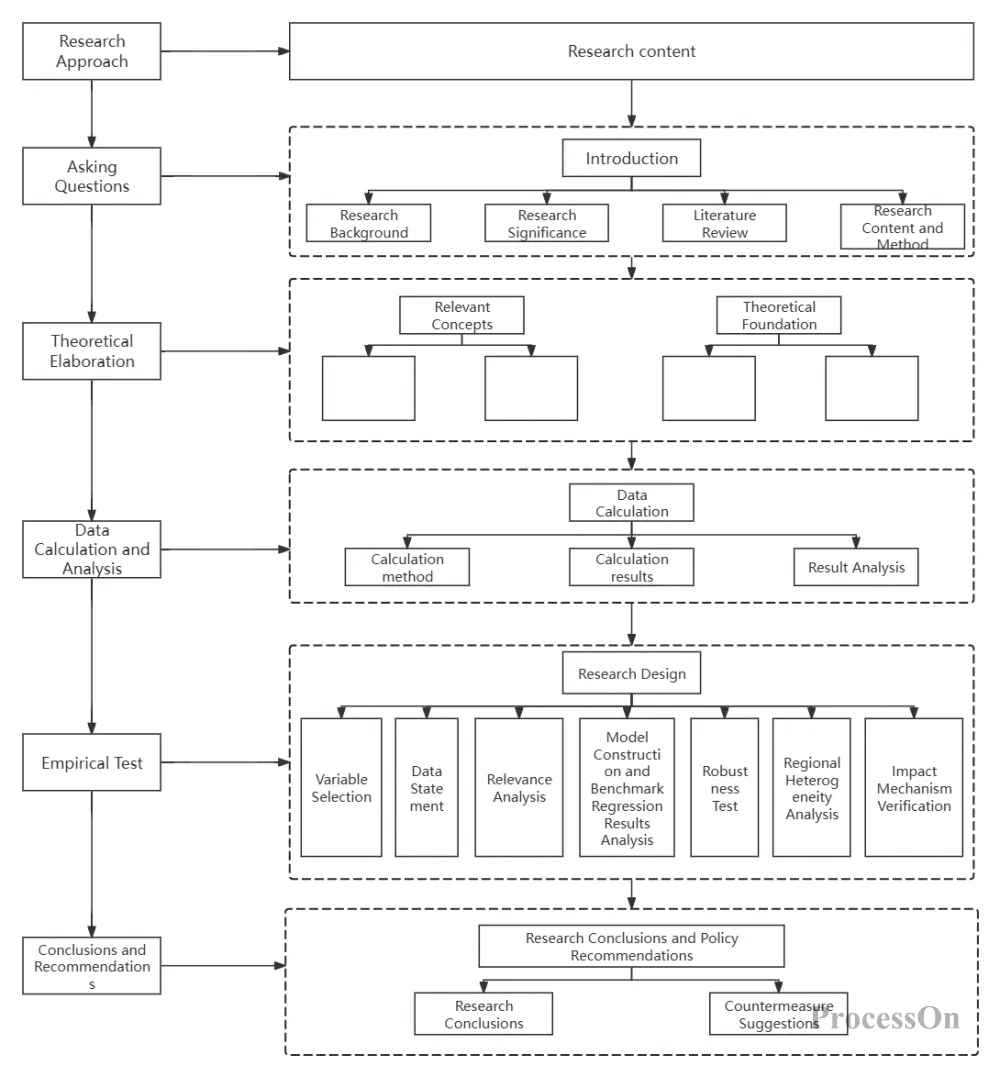
Economic Management Technology Roadmap
If you include this diagram in the "Research Plan" section of your thesis, your supervisor will be able to understand your overall plan at a glance .
Job hunting isn't about blindly sending out applications; it's about a systematic strategy. Based on a mind map, we can break down job preparation into six key steps:
First, create a personal skills list (technical skills such as programming, design, and data analysis, as well as soft skills such as communication and teamwork). Review your work experience and educational background to identify your strongest areas. At the same time, honestly acknowledge the areas where you lack experience, identify the skills you need to improve, and set short-term learning goals.
Research industry trends, emerging technologies, and growth areas to assess career advancement potential. Understand market value for target positions through industry reports and salary data. Analyze competitors, company size, and culture to create a list of potential employers.
By combining your qualifications with the company's hiring requirements, identify the keywords in the job description. Reassess your strengths to ensure your career goals align with the company's needs.
Tailor your resume to the job requirements, highlighting relevant achievements (using quantifiable data). Use keywords to improve your resume's ranking in recruitment systems, ensuring a clear layout and emphasizing key information.
Research the company's background, mission, and culture; prepare behavioral/situational interview questions. Practice your self-introduction, print out your resume, and bring your portfolio. Send a thank-you note after the interview, mentioning points discussed and demonstrating your understanding of the company. Be polite, update your status regularly but avoid over-following.
Update your LinkedIn profile, join professional groups, and attend industry events or seminars. Enhance your skills, build your network, and expand your job search opportunities through training courses, professional certifications, and reading books.
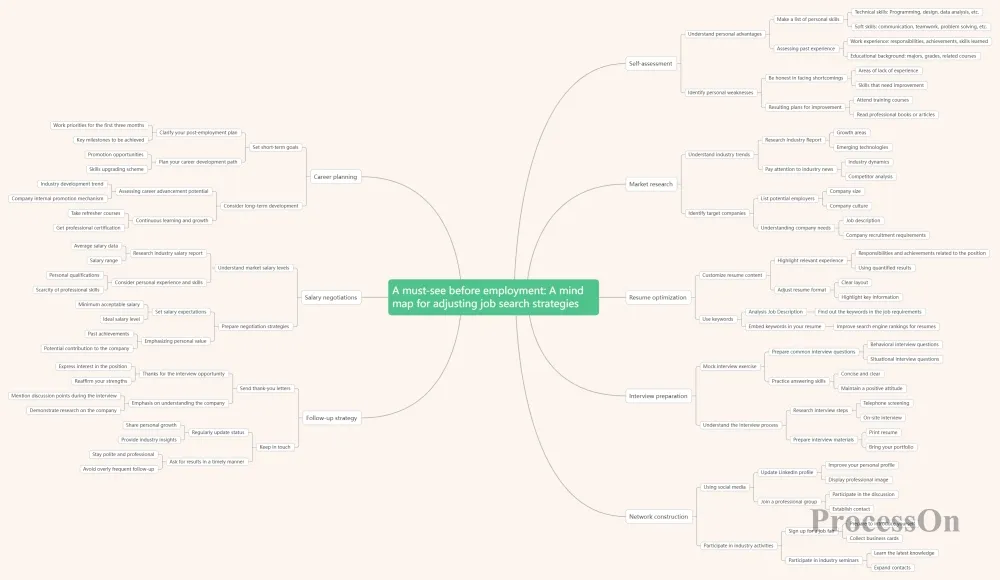
Must-read before employment: Mind map for adjusting job search strategies
The above steps are interconnected, from internal understanding to external action, helping you transform job hunting from "taking a chance" into "navigating with a map".
The core of an interview is proving "you are suitable for this position." Based on the mind map, we can prepare from three levels:
Step 1: Build the framework – answer “Why me?”, “Why this job?”, “Why this company?”, and explain the core advantages, reasons for choosing the company, and the fit in one minute.
Step 2: Decompose the JD – Extract the job responsibilities and requirements into specific skills that correspond to your own experience.
Step 3: Targeted Design – Content needs to be adjusted for different companies, positions, and time periods, highlighting positioning, responsibility execution, and attitude.
First point: What have you done in the past? ( Core strengths )
Second point: What are the results? — Prove it with quantifiable evidence (data, cases).
Third point: If we continue, how will we proceed? — For solved problems, explain the methods used; for unsolved problems, propose solutions and demonstrate the depth of our thinking.
"What are your weaknesses?" - State your honest but not fatal weaknesses, and add that the team can complement them (e.g., "I am sometimes careless, but I am very creative, and I would be perfect with a careful teammate").
"Why did you leave your previous company?" / "Why do you change jobs so often?" - Avoid complaining and explain with "career planning" (such as "I tried several industries in the first two years, but now I have a clear direction and hope to work hard at your company").
"What is your expected salary?" - Campus recruitment focuses on growth, while experienced recruits can mention industry averages or a specific range (e.g., "The industry average is xxx before tax, and I believe the company will make a reasonable assessment").
You can ask: specific job characteristics, company training mechanism, and the interviewer's true feelings.
Avoid asking overly broad or extreme questions; questions that are thoughtless, indiscriminate, embarrassing, or impolite. An interview is essentially a two-way communication; maintain respect and confidence.
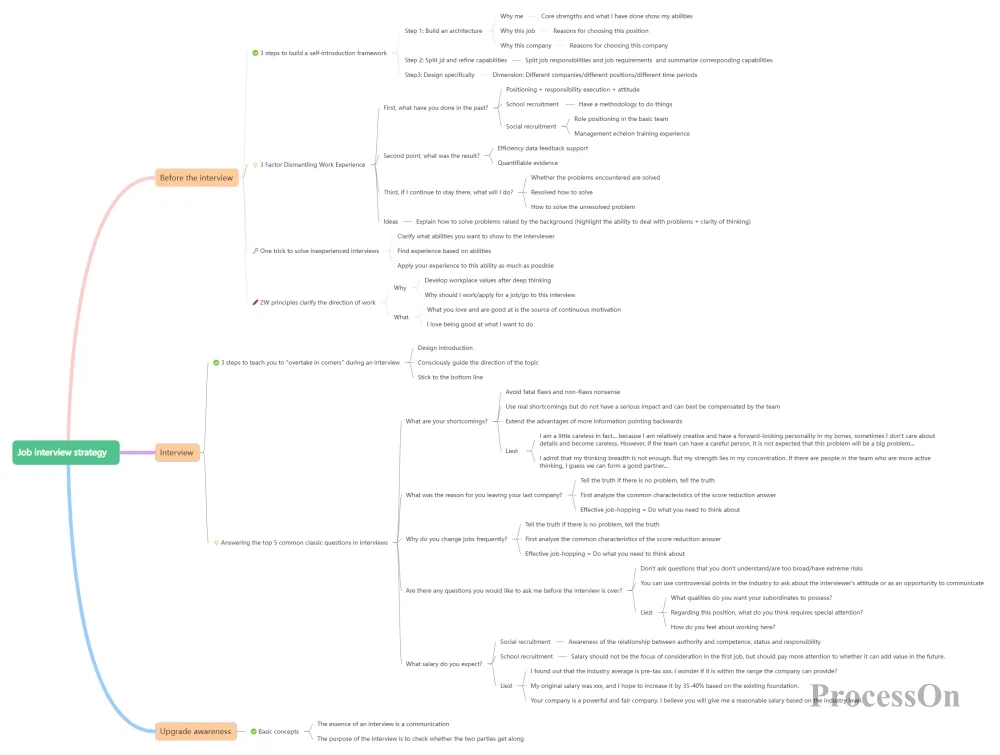
Mastering these conversation techniques and frameworks will allow you to handle interviews with ease and even guide the conversation to showcase your best self.
An interview isn't the end, but the beginning of improvement. Many students forget what they've learned after an interview, resulting in repeating the same mistakes on the next one. You need an interview debriefing process to review your interview performance from cognitive, professional, and linguistic perspectives .
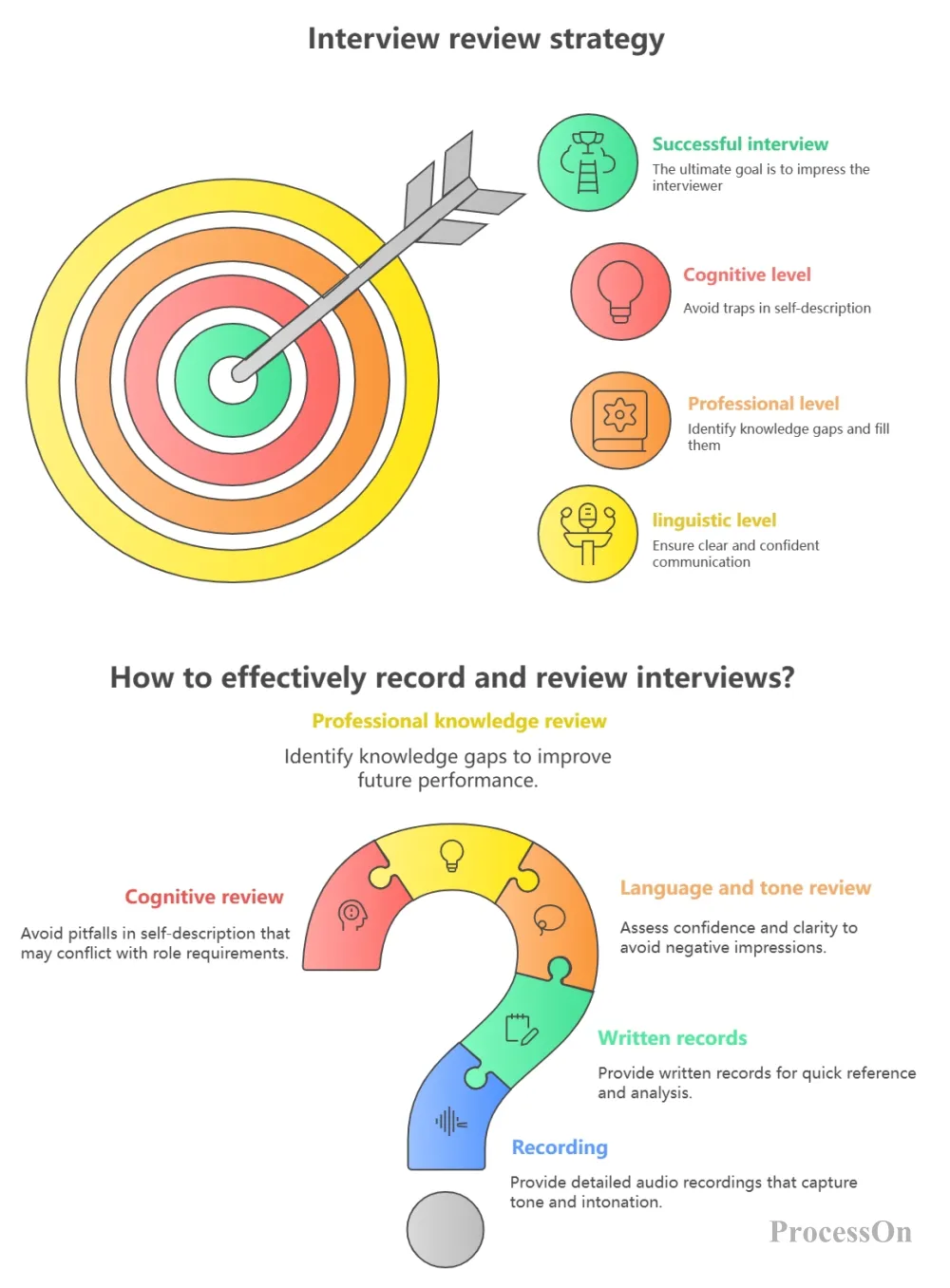
Job interview review strategies
After accumulating several sessions, you'll clearly see your weaknesses and be able to improve them accordingly. At the same time, these records can help you compare different companies, providing a basis for your final decision.
When faced with two or three job offers, many people struggle to choose: Company A offers high salaries but requires a lot of overtime; Company B has a large platform but the positions are peripheral; Company C has a good entrepreneurial atmosphere but is unstable. At this point, don't rely on gut feeling or guesswork; use a radar chart for quantitative analysis.
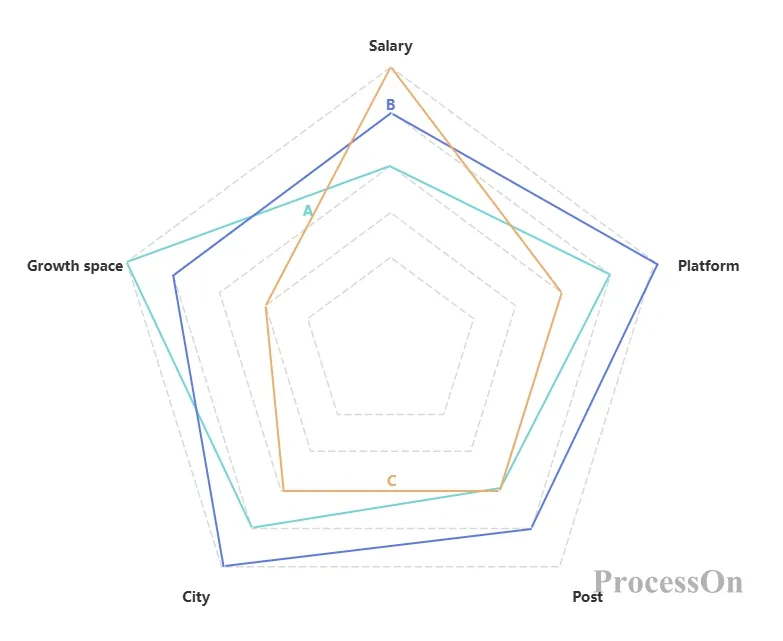
Entry points: How to balance salary, platform, position, city, and growth potential?
Radar chart content: The centerpiece is "Offer Selection Rating," which includes five dimensions (salary, company brand, job fit, training system, and living convenience). Based on real-life examples, radar charts are drawn to compare two different offers, visually showing their respective advantages and disadvantages.
From technical roadmaps for writing papers to job-hunting strategies , interview processes, debriefing records, and offer decisions, charting tools transform chaotic information into clear pathways. When you "draw" out each step, you'll find that graduation season is no longer a jumbled mess, but a checklist you can check off one by one.
Now, open ProcessOn or another diagramming tool and start drawing your thesis's technical roadmap. Clarity at each step will bring you one step closer to your ideal graduation destination.