Process Type
Graphical expression
Mind Type
Structured expression
Note Type
Efficient expression
Treemap
Bracket Diagram

Default Mode





At 7 PM UTC on June 11 , 2026 , a whistle will shatter the silence above the Azteca Stadium in Mexico City. The opening match—Mexico vs. South Africa—will officially kick off the largest FIFA World Cup in history. This is the first time in World Cup history that it is co-hosted by three countries, and the first time that 48 teams will participate, with a total of 104 matches spanning 16 cities across North America. From a simple tournament with only 13 invited teams in 1930 to today's global celebration connecting three continents and three time zones, the allure of football has never been so vast and complex.
For fans who want to understand this World Cup, the more information there is, the more they need a concise and intuitive "cognitive map." Below, we use five diagrams to guide you through the complete picture of this World Cup from the beginning.
The history of the World Cup is a history of continuous growth. In 1930, the first World Cup was held in Uruguay, with only 13 teams invited to participate. The host nation, Uruguay, defeated Argentina 4-2 in the final to become the first-ever world champions. In the nearly one century that followed, the scale of participation underwent several significant expansions: the 1954 World Cup in Switzerland established the 16-team format, the 1998 World Cup in France expanded to 32 teams, and the 2026 World Cup in the USA, Canada, and Mexico will, for the first time, increase the number of participating teams to 48. In 32 years, the number of participating teams has doubled, and the number of matches has increased from 52 to 104, transforming the World Cup from an "invitational tournament" into a truly global event.
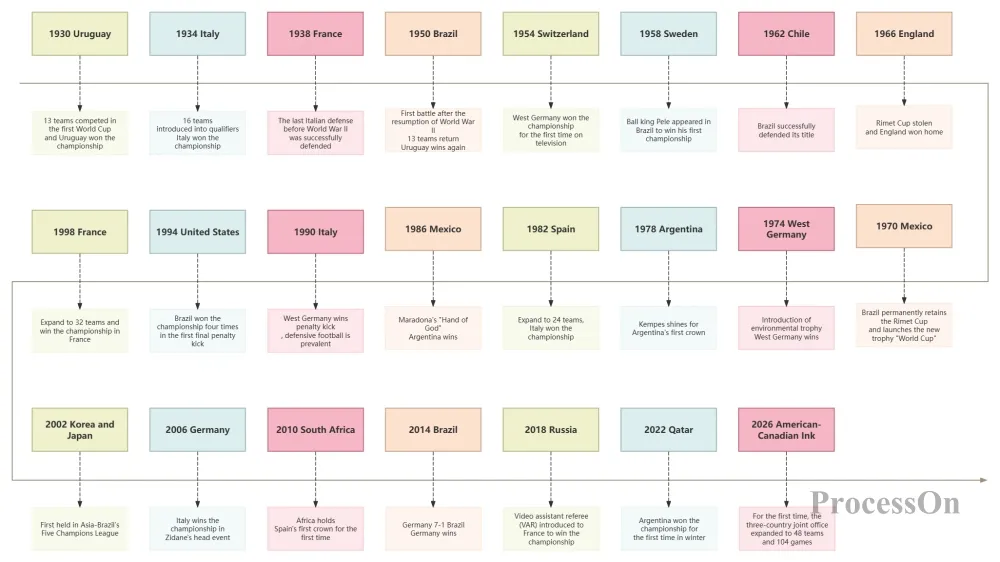
The Development of the World Cup
Brazil tops the list of world champions with five titles, followed by Germany and Italy with four each. Argentina, France, and Uruguay also have their names on the trophy. In this tournament, defending champions Argentina will be aiming for their fourth World Cup title, while star player Lionel Messi is likely to be playing in his final World Cup, giving this tournament a strong sense of farewell and legacy.
Every four years during the World Cup, a large number of new fans are ignited by the sport. To quickly immerse yourself in this celebration, it's essential to grasp the following core concepts first.
First, there's the most easily misunderstood "offside" rule: At the moment an attacking player passes the ball, the receiving player cannot be behind the last defender (excluding the goalkeeper). Simply put, you can't be "lurking" behind the opponent's defensive line waiting to receive the ball before the pass is made; otherwise, you'll be ruled offside , awarding the opposing team an indirect free kick. This is key to understanding the most common rulings in a match.
Secondly, regarding fouls and discipline: Except for the goalkeeper, who may touch the ball with their hands inside their own penalty area, no other player may touch the ball with their hands or arms under any circumstances. Furthermore, dangerous actions such as tackles from behind, pulling jerseys, and shoving opponents are strictly prohibited. Serious fouls will result in a yellow card warning; two yellow cards will automatically be upgraded to a red card, resulting in a direct exit from the match and potential suspension.
Match duration and substitutions: Regular match time consists of two 45-minute halves with a 15-minute halftime break. Interruptions due to injury, celebrations, or other reasons are subject to stoppage time (i.e., injury time) determined by the referee. Each team has three substitution opportunities during regular time (an additional substitution is allowed in extra time).
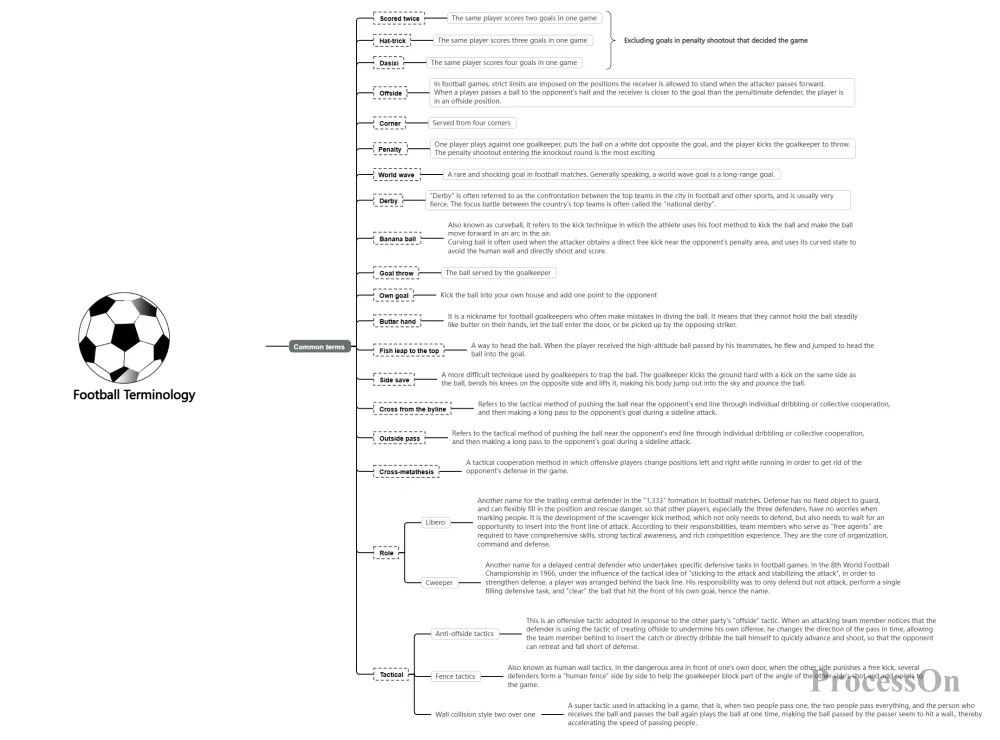
On-field positioning and roles: The 11 players can be roughly divided into four groups. The forwards stand at the forefront, and their main task is to shoot and score; the midfielders are the "brains" of the team, and they are responsible for both defensive interception and passing organization; the defenders guard the back line and work with the goalkeeper to prevent opponents from getting close to the goal; the goalkeeper is the last line of defense, and he uses his hands to save shots in the penalty area.
Common formations:
The 4-4-2 formation is the most classic basic formation, with 4 defenders, 4 midfielders, and 2 forwards. It is balanced in attack and defense and is suitable for teams with no prior experience to use directly.
The 4-3-3 formation leans towards attack, adding a striker and emphasizing wing play, making it suitable for teams that want to focus on offense.
The 4-2-3-1 formation is one of the most popular formations in professional football in recent years. Its characteristics include two holding midfielders protecting the defense, and a front four (two wingers, one attacking midfielder, and one center forward) forming a multi-layered attacking group. This formation can quickly collapse into a 4-5-1 when defending, and can create a numerical advantage when attacking, making it especially suitable for teams with strong attacking midfielders and fast wingers.
The 5-3-2 formation is a typical counter-attacking formation, featuring three center-backs and two wing-backs. The central defense is dense, and after winning possession, the attack quickly progresses down the flanks. This formation demands extremely high stamina from the wing-backs, requiring them to cover both ends of the pitch. It is suitable for teams that adopt a solid defensive counter-attacking strategy against strong opponents.
Regardless of the formation used, the core principle is "each person performs their own role and avoids random movement," maintaining the overall rhythm.
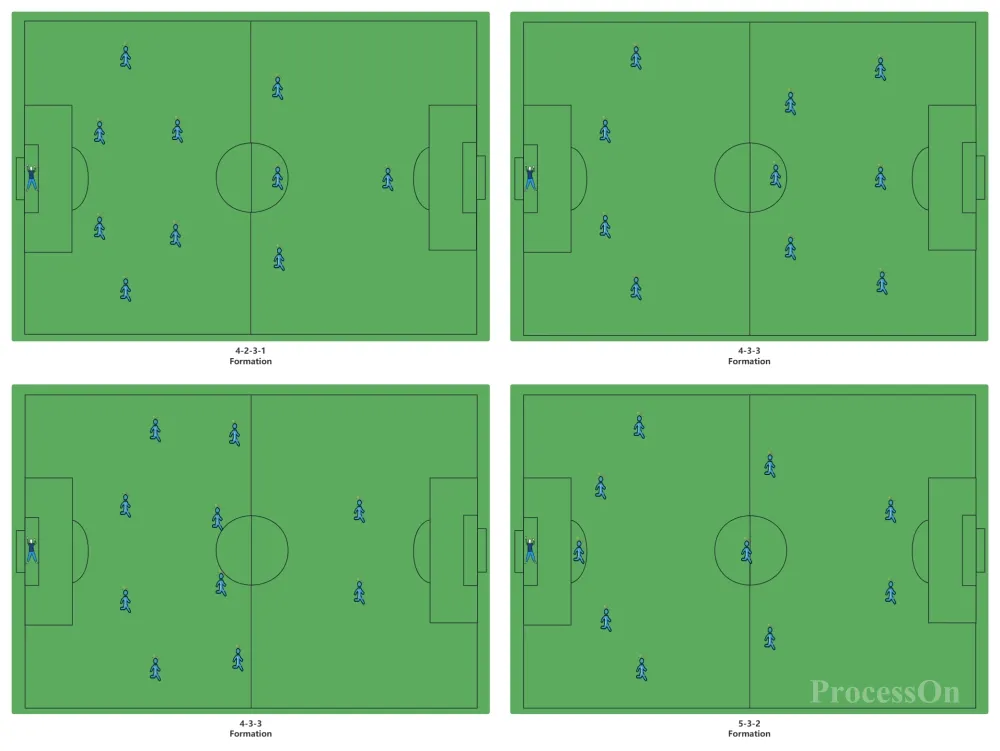
Common football team formations
This World Cup adopted a 48-team format for the first time, with 12 groups of 4 teams each, totaling 72 group stage matches. The top two teams from each group automatically advance to the knockout stage. In addition, the 8 best third-placed teams from all 12 groups will also advance, forming the final 32 teams. This means that every third-placed team in a group still has a chance to advance until the last round, keeping the suspense of the group stage going until the last minute of the final match.
The priority for group stage rankings and the third-place finisher's qualification is as follows: points > goal difference > goals scored > fair play points > FIFA world ranking. This means that even when goal difference and goals scored have been exhausted, an unnecessary red card could be the "last straw" that determines qualification.
The group stage of this World Cup will be held from June 11 to June 27, immediately followed by the single-elimination stage. Starting June 28, the 32 qualifying teams will compete in the Round of 36, Round of 16, Quarter-finals, Semi-finals, Third-place match, and the final. To lift the World Cup trophy, a team needs to play all eight matches within the 39-day tournament period—one more than previous World Cup champions. This is the ultimate test of a team's squad depth, and also means that upsets and injuries will rewrite the championship story more frequently than ever before.
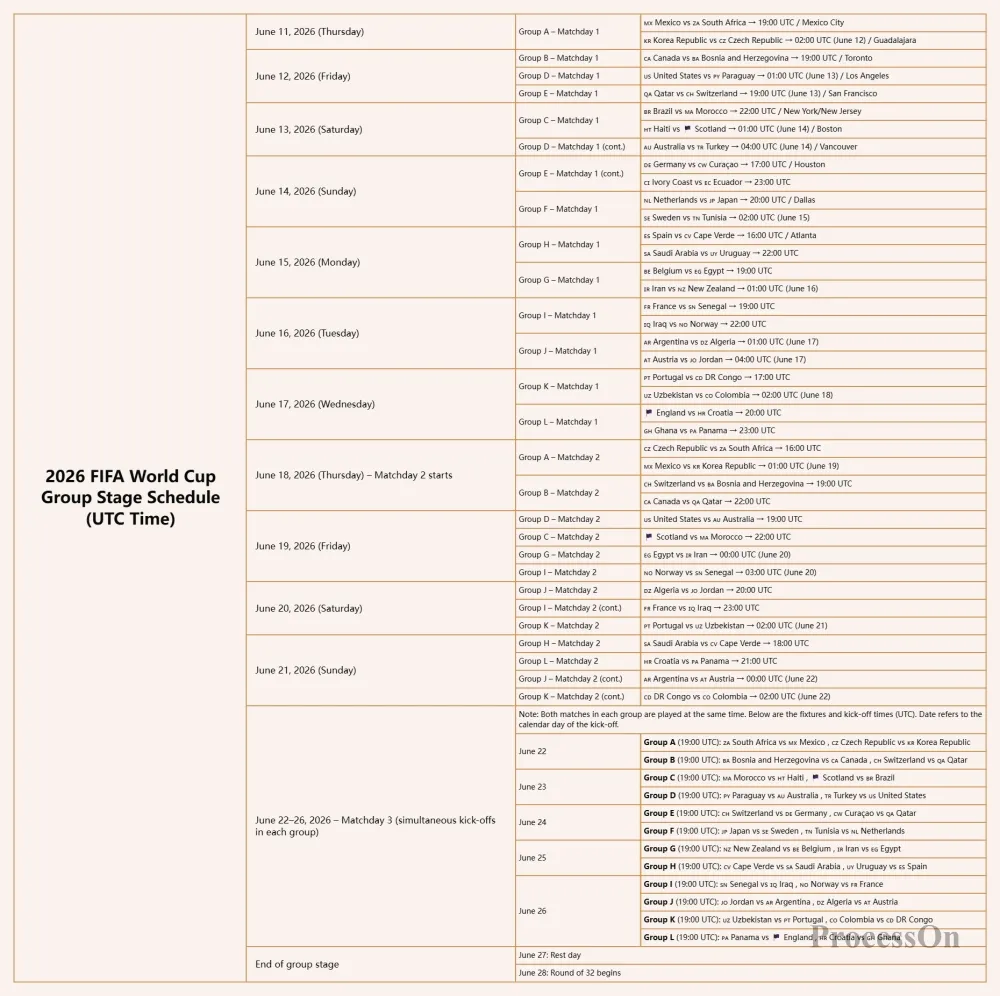
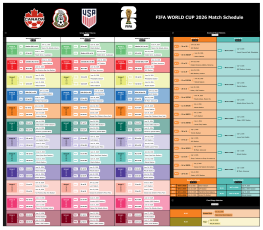
2026 USA-Canadian Cup Group Stage Schedule
Key Opening Match and Group Stage Highlights: The opening match will see hosts Mexico face South Africa in Mexico City on June 11th at 13:00 local time. Following this, hosts Canada will play Bosnia and Herzegovina in Toronto, while the United States will face Paraguay in Los Angeles. Particularly noteworthy group stage clashes include: Belgium vs. Egypt in Group G, Spain vs. Saudi Arabia in Group H, and England vs. Croatia in Group L – the latter being a rematch of the 2018 World Cup semi-final. New faces in this tournament are also noteworthy: Cape Verde, Curaçao, Jordan, and Uzbekistan will all be making their World Cup debuts.
The 2026 FIFA World Cup will be held in 16 cities across three North American countries: 11 in the United States, 2 in Canada, and 3 in Mexico. Below is a summary of basic information for each venue, organized by host country, to help fans choose their viewing destination based on their travel plans.
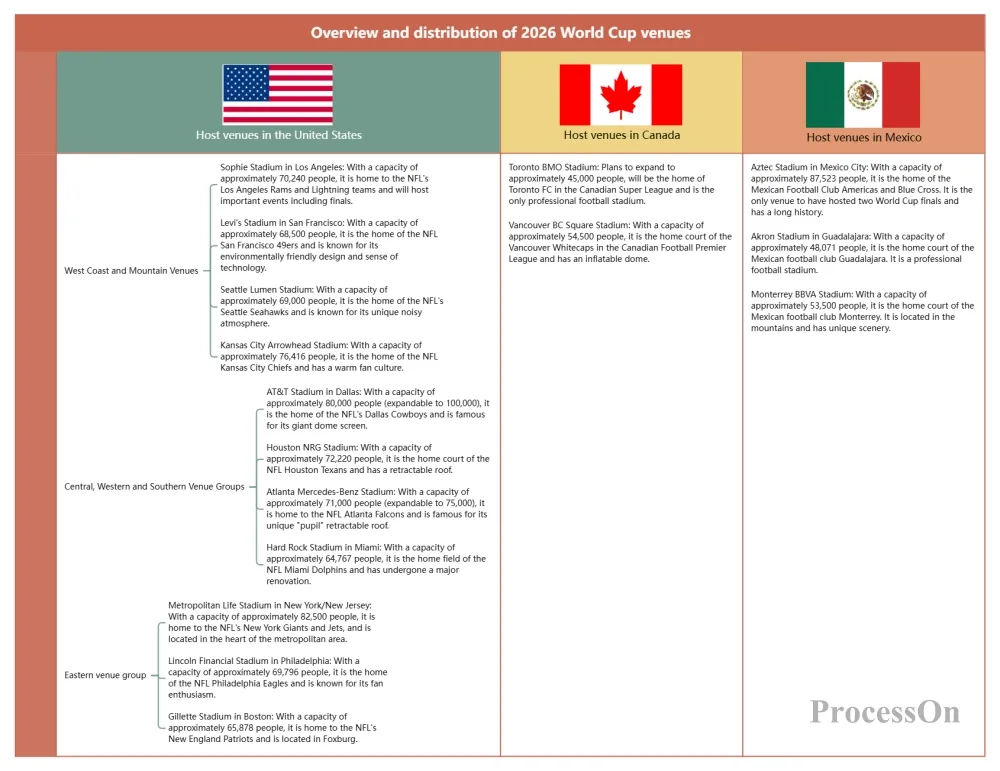
Overview and distribution of venues for the 2026 World Cup
As the national anthems of all 48 teams resounded across North America, as the Aztec stadium in Mexico City witnessed the continuation of history, and as New York's Metropolitan Stadium welcomed a new champion—this special "Three Nations United World Cup" will forever be a summer etched in the memories of a generation of football fans. The allure of football lies not only in the dramatic nature of victory and defeat, but also in its ability to connect people of different languages, time zones, and faiths in a universal and simple way.
All the above charts were created using ProcessOn . You can simply open it, drag and drop a few lines, and turn a chaotic schedule into a clear timeline and an unfamiliar stadium into a familiar seating chart.