Register
Process Type
Graphical expression
Mind Type
Structured expression
Note Type
Efficient expression
Home Page Blog Working ability
What is a fishbone diagram? You will understand after reading this article
The fishbone diagram, as the name suggests, looks like the skeleton of a fish, with thick lines connecting the head and tail, just like the backbone. The fishbone diagram is a method invented by the Japanese management master Mr. Kaoru Ishikawa to discover the "root cause" of a problem. It is also called a cause-and-effect analysis diagram or an Ishikawa diagram. It is simple, practical, in-depth and intuitive. The fishbone diagram is a non-quantitative tool that can help us quickly identify potential root causes of problems.
How to master efficient learning methods and establish a systematic knowledge system?
Efficient learning and building a personal systematic knowledge system is a systematic and continuous process, which plays an important role in personal growth, career development, problem solving and other aspects. This article will explain how to use the SMART principle to set goals and use a variety of learning methods such as mind mapping learning method , Cornell note method, Feynman learning method, etc. to build a personal systematic knowledge system.
2024-09-27
Web Development Process: A Complete Guide from Concept to Launch
Website development is a complex and multi-step process that requires comprehensive consideration of user needs, technical implementation, project management, etc. This article will introduce each link of website development in detail, including demand analysis , project planning, prototype design, front-end development, back-end development, testing and online links, to help readers fully understand the complete process from conception to website launch.
In-depth analysis and application of consumer psychology
As a discipline that studies consumer behavior and decision-making, consumer psychology reveals many underlying psychological motivations and decision-making mechanisms. By mastering these psychological principles, companies can optimize marketing strategies, improve sales performance, and gain an advantage in the market. This article will deeply analyze five core consumer psychology concepts - mental accounting, sunk costs, proportional bias, loss aversion, and price anchors, and explore their application in business practice.
2024-09-27
Unlocking growth potential: Five tips for an in-depth analysis of the AARRR model
In today's digital age, companies of all sizes are increasingly relying on data to drive their growth and success. To achieve this goal, many companies have adopted a model called AARRR, also known as the "Pirate Metrics" model. The AARRR model is a framework that helps companies analyze and optimize the entire process from user acquisition to user retention. In this article, ProcessOn will introduce the five key indicators of the AARRR model in detail: Acquisition, Activation, Retention, Revenue, and Referral .
2024-09-27
Efficient learning methods: six secrets to improve learning efficiency
As a student or a professional who wants to make continuous progress, we all hope to learn efficiently and improve our learning efficiency. However, many people encounter various problems when learning, such as not being able to learn, not being able to remember, forgetting what they have learned, etc. In fact, these are all caused by not mastering the learning method. Today, we will use the ProcessOn drawing tool to sort out some tips for efficient learning for you, hoping to help you improve your learning efficiency.
2024-09-27
HR Three-Pillar Transformation : Building an Efficient Human Resources Management System
In today's highly competitive business environment, the human resource management model is undergoing profound changes, among which the three-pillar transformation has become the focus of many companies. This article will explain in detail how to build an efficient human resource management system after the transformation of the three pillars of HR (SSC , HRBP and COE) .
2024-09-27
The study method used by the top students - The Feynman technique, with super comprehensive reading notes!
The Feynman technique can help you improve your efficiency in absorbing knowledge, truly understand and learn to apply knowledge , and see if you can explain complex and profound problems and knowledge in straightforward and simple language. Next, I will use ProcessOn to share with you in detail the concept, usage and importance of the Feynman Learning Method in daily work and study .
2024-09-27
3 Alternative MInd Map structures with multiple high-resolution templates
The three alternative structures of the mind map: the organization chart, the fishbone chart, and the timeline, are suitable for showing the organizational structure, analyzing problems and solutions, and the process of events, respectively. Using the ProcessOn tool, you can not only draw standard styles, but also achieve more personalized and complex graphic creation through the flowchart function to meet diverse needs.
5 must-see product architecture diagrams for advanced product directors of large companies
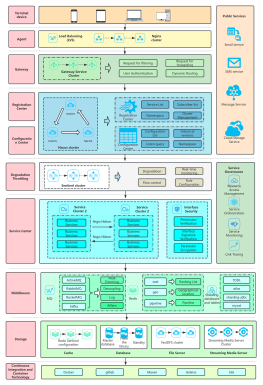
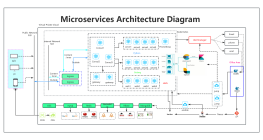
The product architecture diagram is a diagram used by product managers to express their product design mechanisms. It implements product functions into an information-based, modular, and clearly layered visual architecture, and uses different layers of interactive relationships, combinations of functional modules, data and The flow of information is used to convey the business process, business model and design ideas of the product. It is one of the indispensable documents when designing complex products.