Register
Process Type
Graphical expression
Mind Type
Structured expression
Note Type
Efficient expression
Home Page Blog Drawing Tutorials
How to draw a timeline? Teach you how to draw a good-looking timeline in two steps
The timeline connects the past, present and future events in a linear arrangement to form a clear timeline. It can be used to record history, project planning, corporate events and other scenarios. This article will introduce how to use ProcessOn to quickly draw a good-looking timeline.
What is BPMN? BPMN concepts, symbols and examples
In today's rapidly changing business environment, companies must continuously optimize their internal processes to improve efficiency, reduce costs and increase customer satisfaction. Business Process Modeling Notation (BPMN) is a standardized graphical notation that helps companies to optimize their internal processes in different BPMN 2.0 is the latest version of BPMN, which has stronger expressiveness and flexibility, and provides a powerful tool for business process management. This article will use multiple BPMN templates from the ProcessOn template community to illustrate The concept, structure, symbol meaning and application scenarios of BPMN.
How to Create an Entity Relationship Diagram (ERD)?
ER diagram is a graphical representation method for describing entities and their relationships . In the data-driven era, entity-relationship diagram (ER diagram) is a core tool for data modeling, which is very important for understanding, designing and Optimizing the database structure is crucial. This article will explain what an ER diagram is and how to use the ProcessOn tool to draw a professional ER diagram.
What is a fishbone diagram? You will understand after reading this article
The fishbone diagram, as the name suggests, looks like the skeleton of a fish, with thick lines connecting the head and tail, just like the backbone. The fishbone diagram is a method invented by the Japanese management master Mr. Kaoru Ishikawa to discover the "root cause" of a problem. It is also called a cause-and-effect analysis diagram or an Ishikawa diagram. It is simple, practical, in-depth and intuitive. The fishbone diagram is a non-quantitative tool that can help us quickly identify potential root causes of problems.
How to draw the organizational chart? Teach you to draw organizational chart (with HD template to share)
An organization chart, also known as an organization chart, is a visual representation of the relationships between organizations or departments. Different forms of expression can be divided into six kinds of organization chart, through the analysis of advantages and disadvantages to choose the appropriate organization chart to use. This article shows the classification of organizational structures, components, drawing tutorials, and excellent template sharing.
5 must-see product architecture diagrams for advanced product directors of large companies
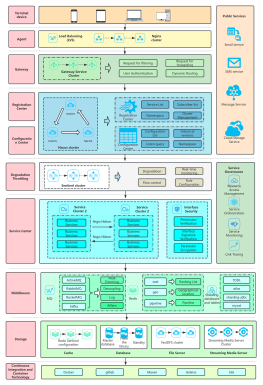
The product architecture diagram is a diagram used by product managers to express their product design mechanisms. It implements product functions into an information-based, modular, and clearly layered visual architecture, and uses different layers of interactive relationships, combinations of functional modules, data and The flow of information is used to convey the business process, business model and design ideas of the product. It is one of the indispensable documents when designing complex products.
14 common structures of mind maps Draw simple and beautiful mind maps
Mind mapping can restore the brain's thinking process and is conducive to divergent expression and thinking. There are 7 common structure types in mind maps. Choose the appropriate structure type according to the level of thinking to express complex knowledge points or ideas. Different mind maps are suitable for different scenarios.
Tips for making high-value flowcharts, including free template recommendations
A good-looking flowchart can improve readability and portability. Beautiful layout, clear graphics and icons, reasonable color matching and concise text description can make the flowchart easier to read and understand. It helps readers quickly grasp the structure and key points of the entire process and reduce obstacles to understanding. So how to make a good-looking flowchart ? Today, the editor will share with you.
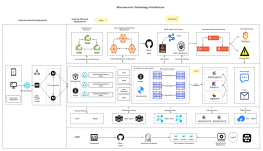
How to create a clear architecture diagram? A must for product and developer
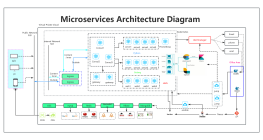
The architecture diagram graphically displays the components of the architecture and the relationships between them, providing an intuitive and comprehensive view of the system. Common architecture diagrams include business architecture diagrams, product architecture diagrams, functional architecture diagrams, technical architecture diagrams, data architecture diagrams, deployment architecture diagrams, etc., which can help different roles (such as developers, operation and maintenance personnel, product managers, etc.) understand and analyze the system from different perspectives. This article will explain in detail the types of architecture diagrams and how to use ProcessOn to draw a clear architecture diagram.
Deep understanding of BPMN: a powerful tool for process management
BPMN is a graphical standard for business process modeling. It provides a set of intuitive and easy-to-understand symbols and syntax so that business processes can be clearly represented and understood. The main purpose of BPMN is to facilitate the visualization, analysis and optimization of business processes and improve the efficiency and quality of business processes.