
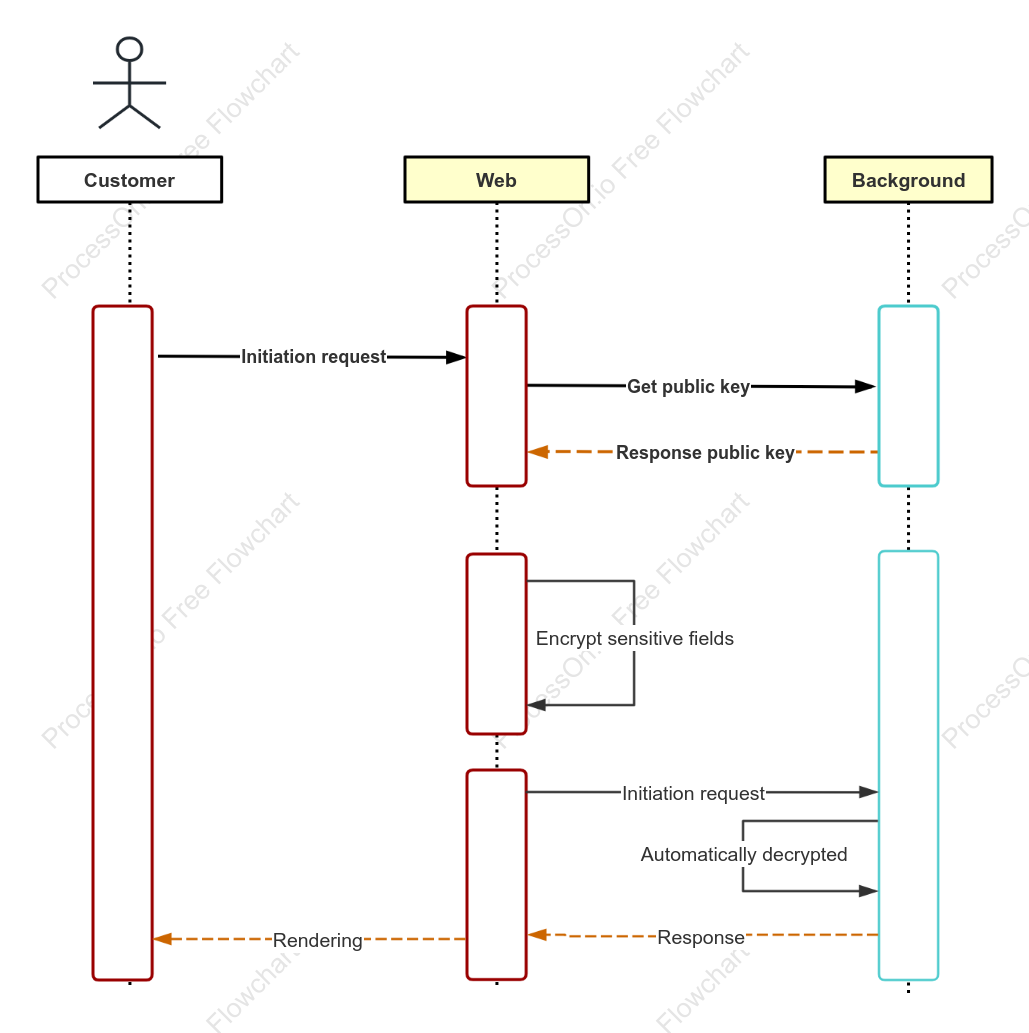

Frontend and Backend Encryption/Decryption Process
1 Report
In front-end and back-end communication, encryption and decryption are crucial steps in ensuring data security. The core content involves protecting data during transmission between the client and server. The front-end first encrypts the data, commonly using symmetric encryption algorithms (such as AES) and asymmetric encryption algorithms (such as RSA), sometimes combined with hash functions (such as SHA-256) for integrity verification. The encrypted data is securely sent to the back-end server. Upon receiving the data, the back-end decrypts it according to the encryption key and algorithm used to process the request. This process is generally accompanied by secure transmission protocols, such as HTTPS/TLS, to ensure the confidentiality and integrity of data during transmission. Encryption during file transfer ensures that data, including sensitive personal information and transaction credentials, cannot be intercepted or tampered with on public networks. The front-end encryption interface should be designed to be simple and smooth, while the back-end needs to optimize algorithm processing efficiency and resource consumption. This process not only enhances data security but also increases user trust, making it an indispensable part of modern network security.
Related Recommendations
Other works by the author
Outline/Content
See more
Customer
Response
Background
Automatically decrypted
Get public key
Initiation request
Response public key
Web
Rendering
Encrypt sensitive fields
Collect
Collect
Collect

Collect

0 Comments
Next Page