
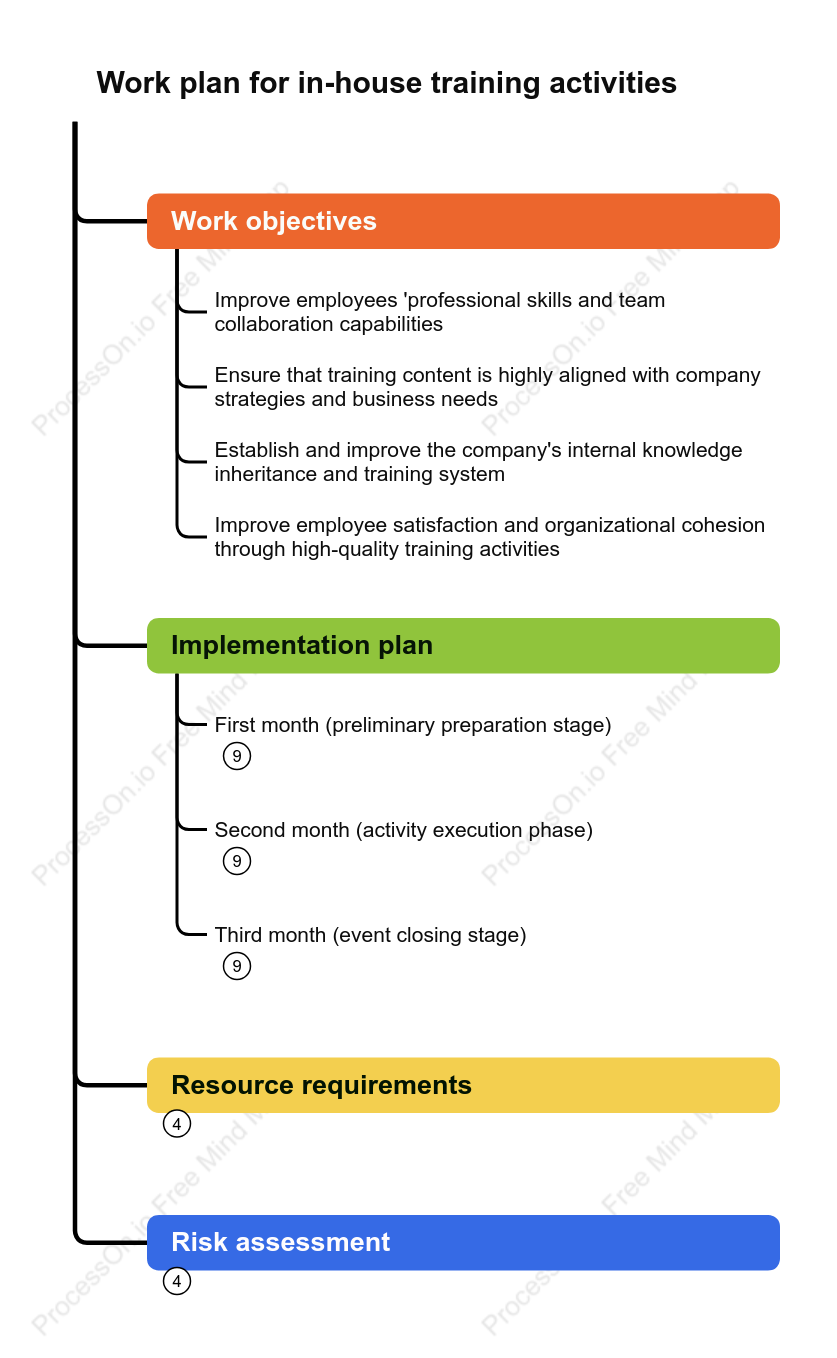

Company Internal Training Program Tree Diagram
1 Report
This template is suitable for developing internal company training plans. It uses a tree structure to break down training content into layers (such as training objectives, course arrangements, implementation plans, and evaluation methods), helping to systematically organize the training system and execution path.
Related Recommendations
Other works by the author
Outline/Content
See more
Work objectives
Improve employees 'professional skills and team collaboration capabilities
Ensure that training content is highly aligned with company strategies and business needs
Establish and improve the company's internal knowledge inheritance and training system
Improve employee satisfaction and organizational cohesion through high-quality training activities
Implementation plan
First month (preliminary preparation stage)
requirements validation
Communicate with heads of various departments to clarify business pain points and training needs
Collect employee expectations for training topics and forms through questionnaire surveys
content preparation
Develop detailed training syllabus and course content based on identified needs
Prepare or purchase teaching materials, cases and supporting materials required for training
personnel arrangement
Identify and invite internal instructors or external training experts
Establish a training project support group and clarify the responsibilities of each member
Second month (activity execution phase)
scene to organize
Complete training venue layout, equipment debugging and material distribution
Organize students to sign in and guide them to create a good learning atmosphere
process control
Promote all links in strict accordance with the training schedule to ensure time control
Organize classroom interactions, group discussions and other links to increase participation
problem handling
Establish on-site support posts to respond to and resolve technical or logistical issues in a timely manner
Flexibility to adjust teaching rhythm and methods to respond to emergencies
Third month (event closing stage)
feedback collection
Issuing anonymous electronic assessment questionnaires immediately after training
Conduct one-on-one interviews with some students and lecturers to get in-depth feedback
effect evaluation
Analyze questionnaire data and quantitatively evaluate training satisfaction and knowledge mastery
Track behavioral changes after training and assess the impact of training on practical work
Summary re-offer
Hold a project review meeting to summarize the successful experiences and shortcomings of this event
Archive all training materials and reports and form standardized process documents
Resource requirements
Human resources: 1 training project manager, several internal/external lecturers, 2 - 3 activity support personnel, and coordination and interface persons of each department
Material resources: training venues (conference rooms or professional training rooms), teaching equipment such as projectors, stereos, and whiteboards, printed textbooks and school supplies, and supplies for tea breaks
Funding: Lecturer remuneration (if external experts), venue rental fees, purchase of textbooks and materials, coffee break expenses, possible incentive prizes
Time: A complete cycle of about 3 months in total. It is necessary to ensure that key tasks at each stage are completed on time and reserve buffer time for adjustments.
Risk assessment
Risk of demand deviation: Insufficient preliminary research may lead to a disconnect between training content and actual needs. Response strategy: Adopt multi-dimensional (management, employee) needs research and conduct small-scale verification before confirming the outline.
Participation and effectiveness risks: Employees are not motivated to participate or the training effect is difficult to translate into work. Coping strategies: Design interactive and practical courses, appropriately link training with performance appraisal or promotion mechanisms, and strengthen post-training follow-up and coaching.
Execution process risks: Unexpected situations such as temporary changes in instructors, equipment failures or schedule conflicts may occur. Coping strategies: Develop alternative instructor plans, conduct equipment early testing and backup preparation, and maintain close communication with various departments to ensure student time.
Risk of budget overrun: Expenses for venues, instructors, etc. may exceed the original budget. Response strategies: Obtain multiple quotations during the planning stage, set a clear budget approval process, and strictly control unplanned expenditures during implementation.
Collect
Collect
Collect
Collect
Collect

Collect

Collect
Collect

0 Comments
Next Page