
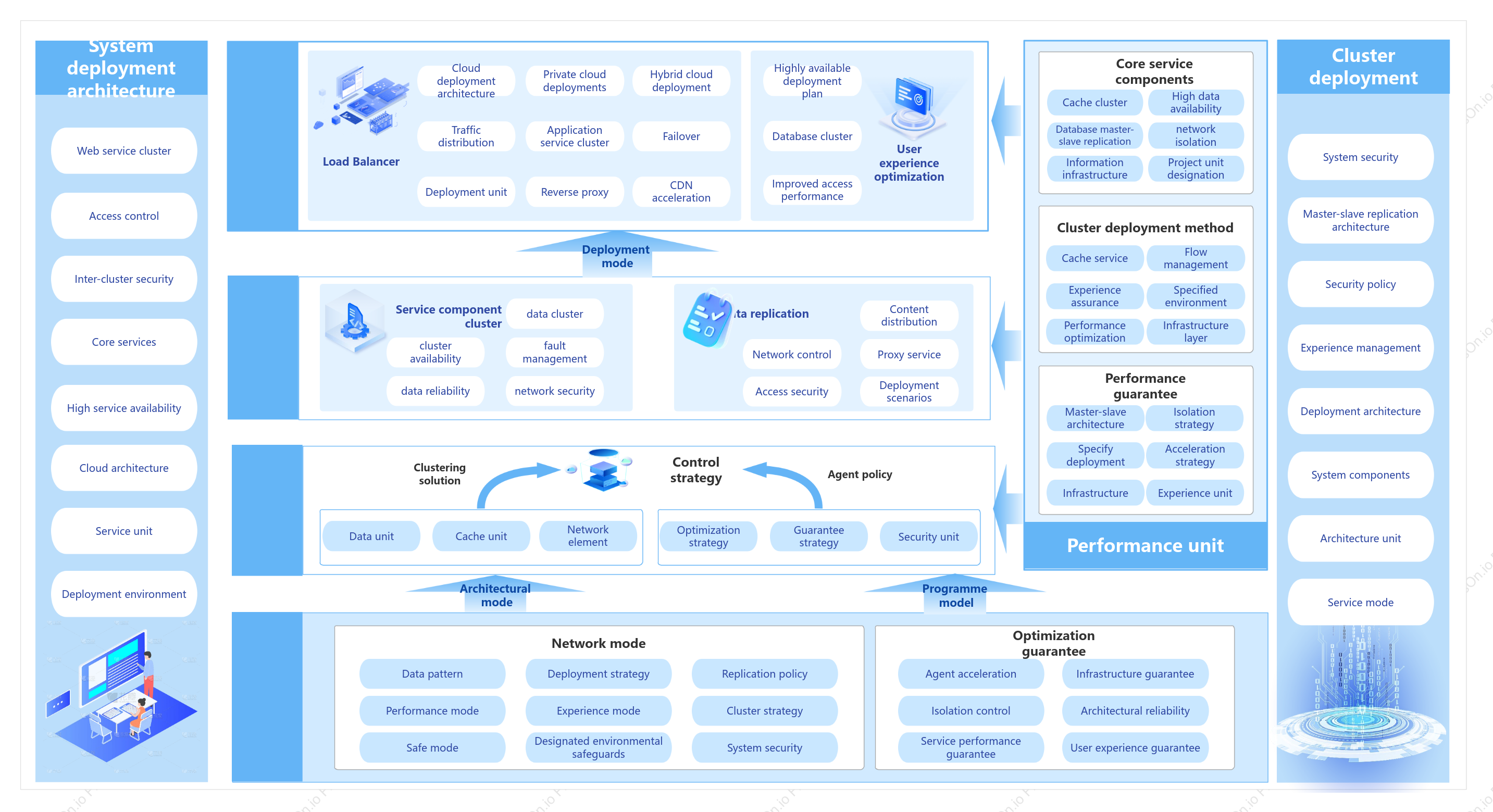

System Deployment Architecture
2 Report
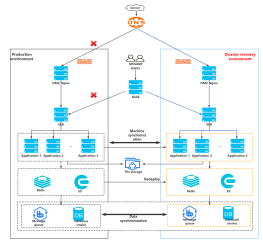
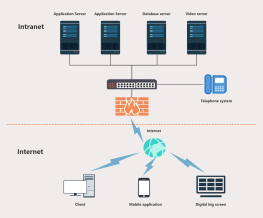
This architecture diagram illustrates the complete deployment topology of the system from user access to backend services. The overall deployment strategy employs a layered approach, including the access layer (DNS resolution, CDN acceleration, load balancing Nginx/ALB), the application layer (multi-node containerized deployment, based on Kubernetes/Docker orchestration, services including API Gateway, business microservices, scheduled tasks, etc.), the data layer (master-slave databases MySQL/PostgreSQL, high-availability Redis cluster, object storage OSS), and the middleware layer (message queues Kafka/RabbitMQ, service registration and discovery Nacos/Consul). The architecture also encompasses a log monitoring system (ELK/EFK log collection, Prometheus metric monitoring, Grafana visualization), security protection strategies (WAF firewall, SSL encryption, network isolation VPC), and disaster recovery and backup mechanisms (cross-availability zone deployment, cold backup, multi-site active-active architecture), ensuring high availability, scalability, and operational observability of the system.
Related Recommendations
Other works by the author
Outline/Content
See more
Cluster deployment method
Web service cluster
cluster availability
Isolation control
Service performance guarantee
Agent policy
Improved access performance
Service mode
Core services
System security
Application service cluster
Control strategy
Security policy
Infrastructure guarantee
Experience mode
Deployment unit
Failover
Content distribution
System components
Infrastructure
Database cluster
Specify deployment
Deployment environment
Cluster deployment
Experience unit
Deployment strategy
Replication policy
Safe mode
Specified environment
Inter-cluster security
Network mode
Experience management
Private cloud deployments
network isolation
Cloud deployment architecture
data cluster
Agent acceleration
Isolation strategy
Service unit
Performance optimization
Cloud architecture
Performance unit
network security
Master-slave replication architecture
Flow management
Architecture unit
Designated environmental safeguards
Hybrid cloud deployment
fault management
Architectural reliability
Data pattern
Network control
Cache unit
Optimization strategy
Architectural mode
Cache service
Network element
Cache cluster
System deployment architecture
Master-slave architecture
User experience guarantee
Reverse proxy
Guarantee strategy
Information infrastructure
Highly available deployment plan
data reliability
Access security
High data availability
Performance guarantee
Data replication
Service component cluster
Load Balancer
Cluster strategy
Deployment architecture
Optimization guarantee
User experience optimization
Clustering solution
Core service components
Security unit
Acceleration strategy
Deployment scenarios
Project unit designation
High service availability
Database master-slave replication
Proxy service
Access control
CDN acceleration
Performance mode
Deployment mode
Traffic distribution
Experience assurance
Data unit
Infrastructure layer
Programme model
Collect
Collect
Collect
Collect

0 Comments
Next Page