
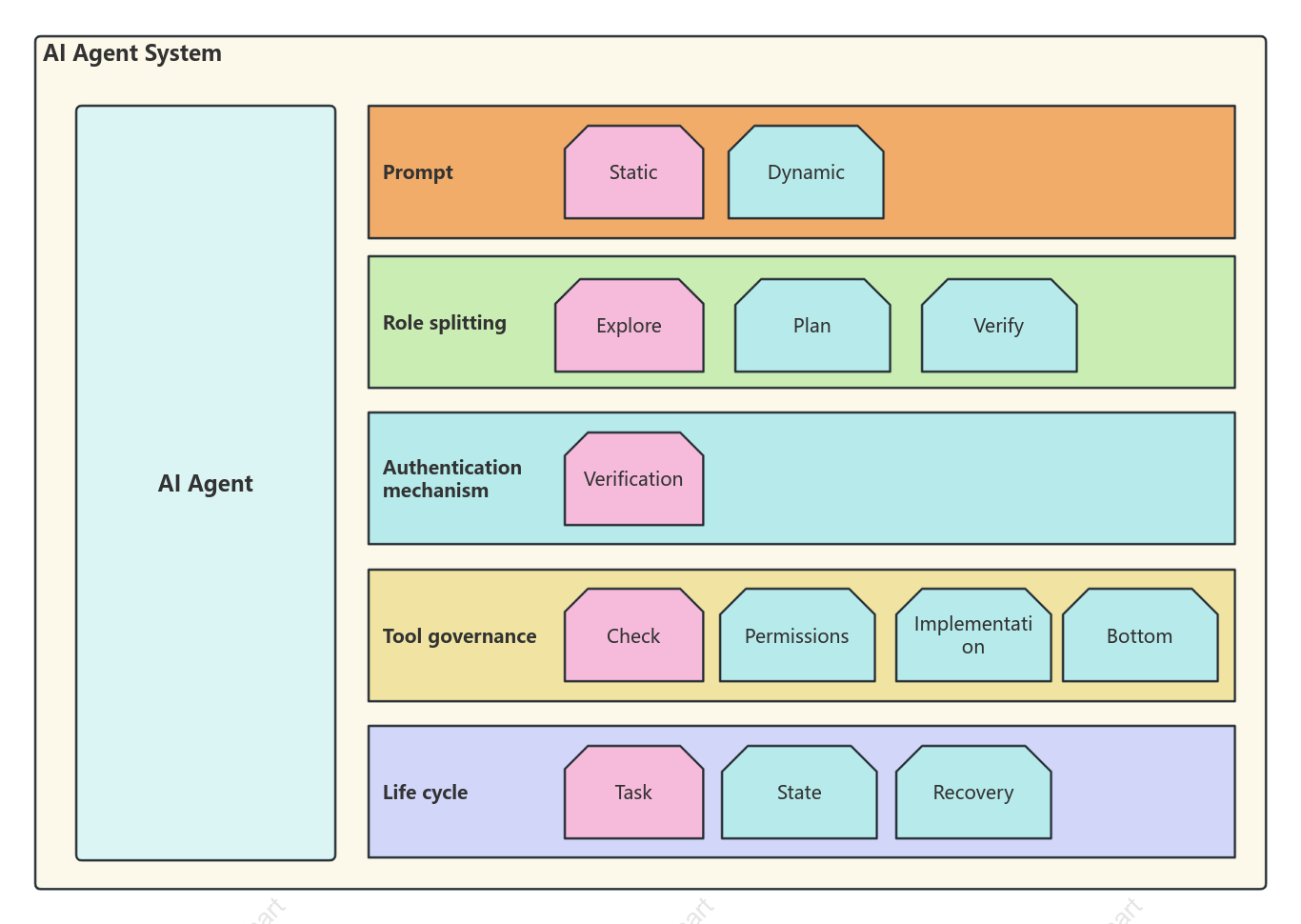

AI Agent System Architecture
1 Report
The system architecture of the AI Agent System is the core technological framework for enabling intelligent agents to autonomously perceive, make decisions, and act. This section will delve into the typical layered design of this architecture, including the user interaction layer, perception and memory modules, planning and inference engine, tool invocation interface, and execution and feedback loop. Among these, the large language model, as the cognitive core, is responsible for intent understanding and task decomposition; short-term and long-term memory mechanisms support context management and experience accumulation; and standardized tool invocation protocols (such as Function Calls, MCPs, or custom API gateways) enable the Agent to reliably operate on the external environment and third-party applications. By explaining the data flow, control flow, and exception handling strategies between the components, this architecture provides systematic guidance for building production-grade Agent systems with autonomy, responsiveness, and collaborative capabilities.
Related Recommendations
Other works by the author
Outline/Content
See more
Permissions
Explore
State
Role splitting
Plan
Dynamic
Verify
Verification
Authentication mechanism
Check
Static
AI Agent System
Recovery
Task
AI Agent
Bottom
Prompt
Tool governance
Life cycle
Implementation
Collect
Collect
Collect
Collect

0 Comments
Next Page