
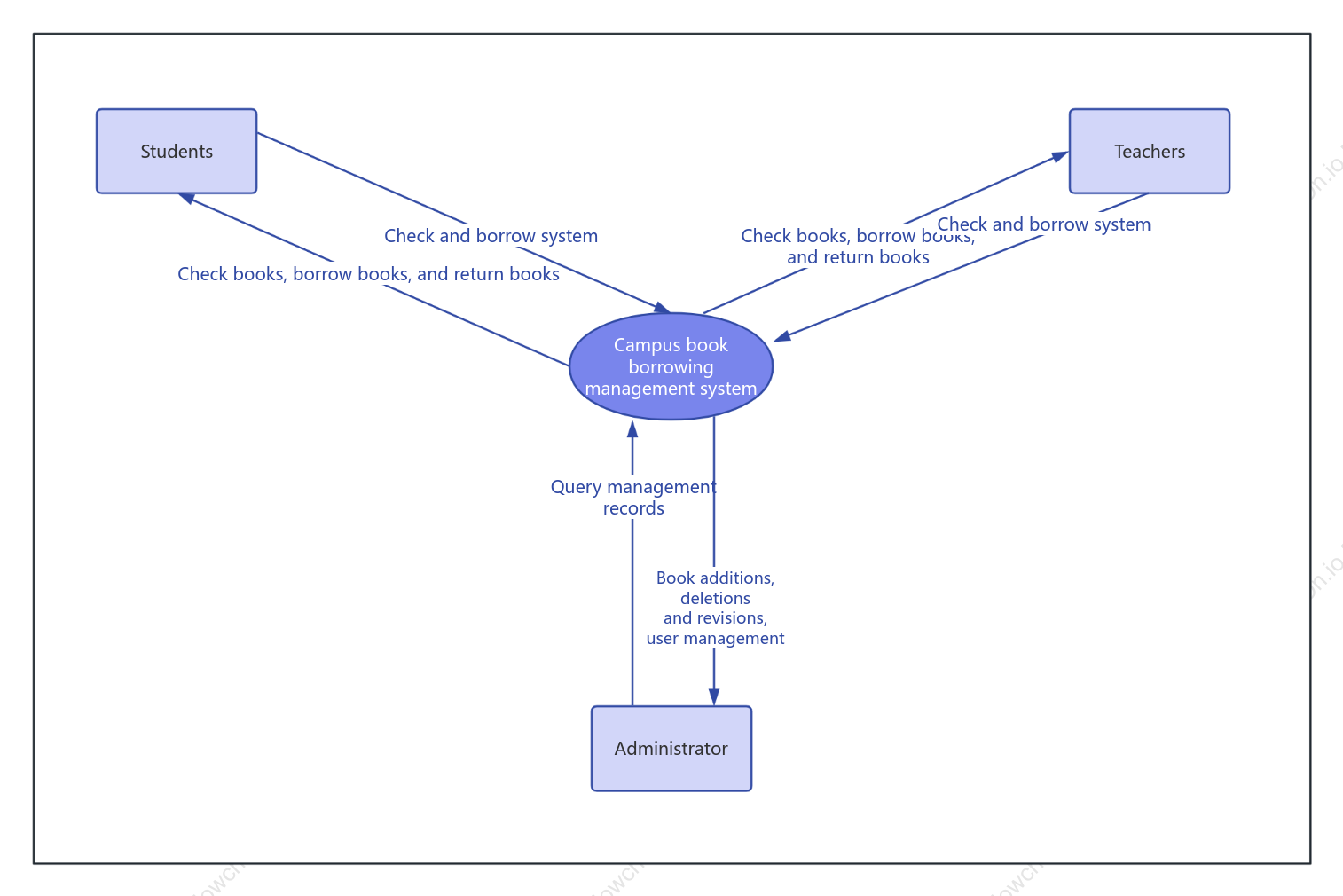

Library Management System Structure Use Case Diagram
1 Report
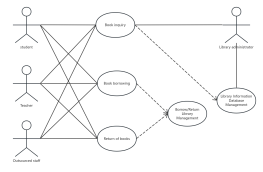
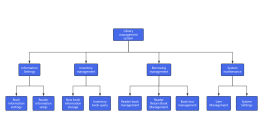
The use case diagram of a library management system is a visual modeling tool that depicts the system boundary, external actors, and their interactions with system functions. It aims to clarify the system's responsibilities and core business requirements from a high-level perspective. This section elaborates on the core components of this use case diagram, including the system boundary box, two main types of actors, and core use cases. Actors are divided into two categories: librarians and general readers. Librarians are responsible for book acquisition, cataloging, borrowing and returning registration, handling overdue fines, and maintaining reader information. General readers can perform operations such as searching for books, self-service borrowing and returning, reserving books, viewing their borrowing history, and renewing loans. The core use cases covered within the system boundary include "Login Authentication," "Book Search," "Borrowing Management," "Return Processing," "Reservation Management," "Fine Payment," "Reader Management," and "Report Statistics." Use cases are structured to express necessary and optional processes through inclusion relationships (e.g., "Borrowing Management" includes "Verifying Reader Permissions and Borrowing Limits") and extension relationships (e.g., "Return Processing" can be extended to "Calculating Overdue Fines"). The library management system in the context diagram also needs to connect with external entities through interfaces, such as the campus card authentication system, the book cataloging database, and self-service borrowing and returning terminals, to reflect the data flow and boundary interactions in a real deployment environment. By outlining the preconditions, poststates, and exception branches of each use case, this use case diagram provides clear requirement anchors for subsequent system interaction design, role and permission table definition, and functional acceptance testing.
Related Recommendations
Other works by the author
Outline/Content
See more
Query management records
Campus book borrowing management system
Teachers
Check and borrow system
Students
Administrator
Collect
Collect
Collect
Collect

0 Comments
Next Page