
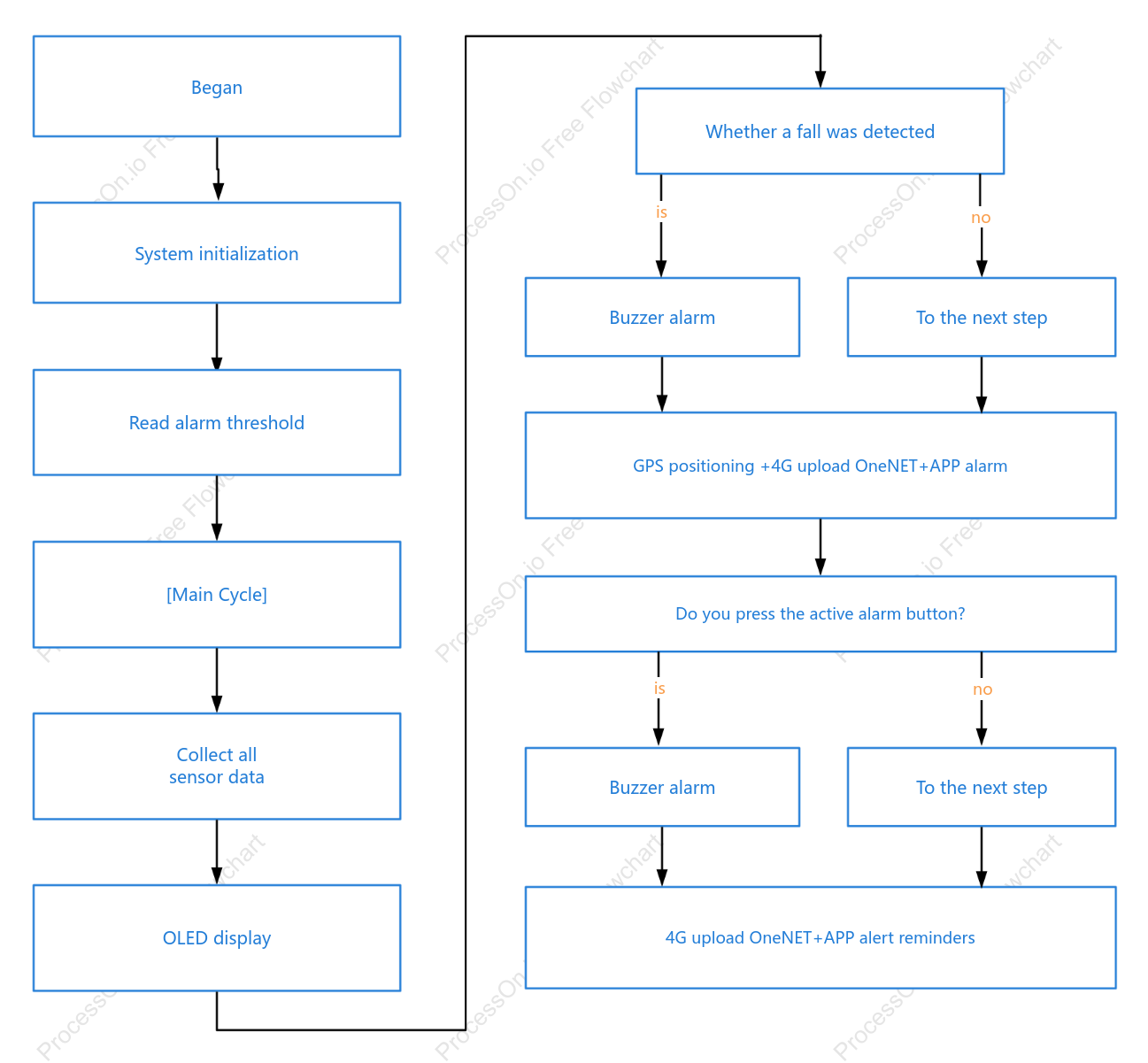

Anti-drop sensor workflow
1 Report
The fall protection sensor workflow is the core logical link for achieving fall detection and active protection. It aims to trigger alarms or protective actions promptly when the human body experiences instability or impact through multi-dimensional sensing and rapid response mechanisms. This section systematically describes the typical steps of this process, including five stages: data acquisition, motion state analysis, feature extraction, fall detection, and execution response. At the data acquisition layer, multiple sensors such as accelerometers, gyroscopes, and barometers simultaneously capture triaxial acceleration, angular velocity, and height change information at high sampling rates (typically 50-200Hz). In the motion state analysis stage, filtering algorithms (such as complementary filtering or Kalman filtering) are used to eliminate noise and fuse attitude calculations to obtain tilt angle and resultant acceleration values. The feature extraction stage focuses on key indicators such as impact peak value, weightlessness duration, and attitude angle change rate. Fall detection uses threshold rules or lightweight machine learning models (such as decision trees or single-hidden-layer neural networks) to make real-time decisions on whether a fall event has occurred. The final execution response includes triggering a buzzer alarm, sending a wireless distress signal (such as Bluetooth/Wi-Fi/LoRa), or activating physical protection devices such as airbags/air cushions. By analyzing timestamp alignment, low-power wake-up strategies, and false alarm suppression mechanisms, this process provides a systematic reference solution for the design of elderly monitoring, high-risk work protection, and sports safety equipment.
Related Recommendations
Other works by the author
Outline/Content
See more
[Main Cycle]
Whether a fall was detected
Began
no
is
To the next step
Buzzer alarm
Do you press the active alarm button?
Collect allsensor data
4G upload OneNET+APP alert reminders
Read alarm threshold
OLED display
System initialization
GPS positioning +4G upload OneNET+APP alarm
Collect
Collect
Collect
Collect

0 Comments
Next Page